Your kid has been on the iPad for three hours and it's not even noon. Or a bigger kid has started "joking around" with him at school and he's stopped wanting to go. Or she can't sit still through dinner. Or he's so shy he hides behind your leg at birthday parties.
Somebody said "put them in martial arts." And now you're standing outside a gym on Hollywood Blvd wondering if that's going to help, or just make things worse.
Short version: Martial arts makes kids calmer, not more aggressive, because a kid who knows they can handle themselves has nothing to prove. Training is supervised and technique-first, and nobody starts athletic. The benefits that matter most show up at home: focus, self-control, confidence from earned belts, and learning to lose a round and shake hands.
Will martial arts make my kid aggressive?
No. In our experience it does the opposite, and there's a simple reason why. Aggression in kids usually comes from fear or frustration. A kid who's been taught how to control their body, and who knows they can get out from under a bigger kid, doesn't feel the need to prove anything on the playground.
There's also the humbling part. Most kids who start jiu jitsu get pinned by someone smaller within the first few weeks. Every kid in Muay Thai finds out that swinging wild gets you tired and nowhere. Nothing takes the swagger out of a kid faster, and nothing replaces it with real, quiet confidence better.
The rules do the rest. Respect for training partners, instructors and opponents is the first thing kids learn here, and self-control is the skill under everything else. The kids who train with us are the last ones to start a fight, because they're the ones who don't need to.
Is martial arts safe for kids?
Yes, in a program that's supervised and technique-first, which is the only kind worth paying for. Kids' jiu jitsu is grappling: no strikes, and a tap ends any exchange instantly. Kids' Muay Thai is mostly footwork, punches and kicks on pads and shields with a coach holding them. It's not a fight club for eight-year-olds.
Will there be bumps? Sure. A scraped knee, a mat burn, a sore neck after a rough round. What we see on the mats is a lot of bumps and very few real injuries, because everything happens slowly, on a soft surface, with a coach a few feet away.
The bigger safety win is the one you're probably not thinking about. A kid who trains knows how to fall, how to get someone off them, and how to stay calm when things get physical. That's protection that goes with them everywhere.
My kid isn't athletic. Does that matter?
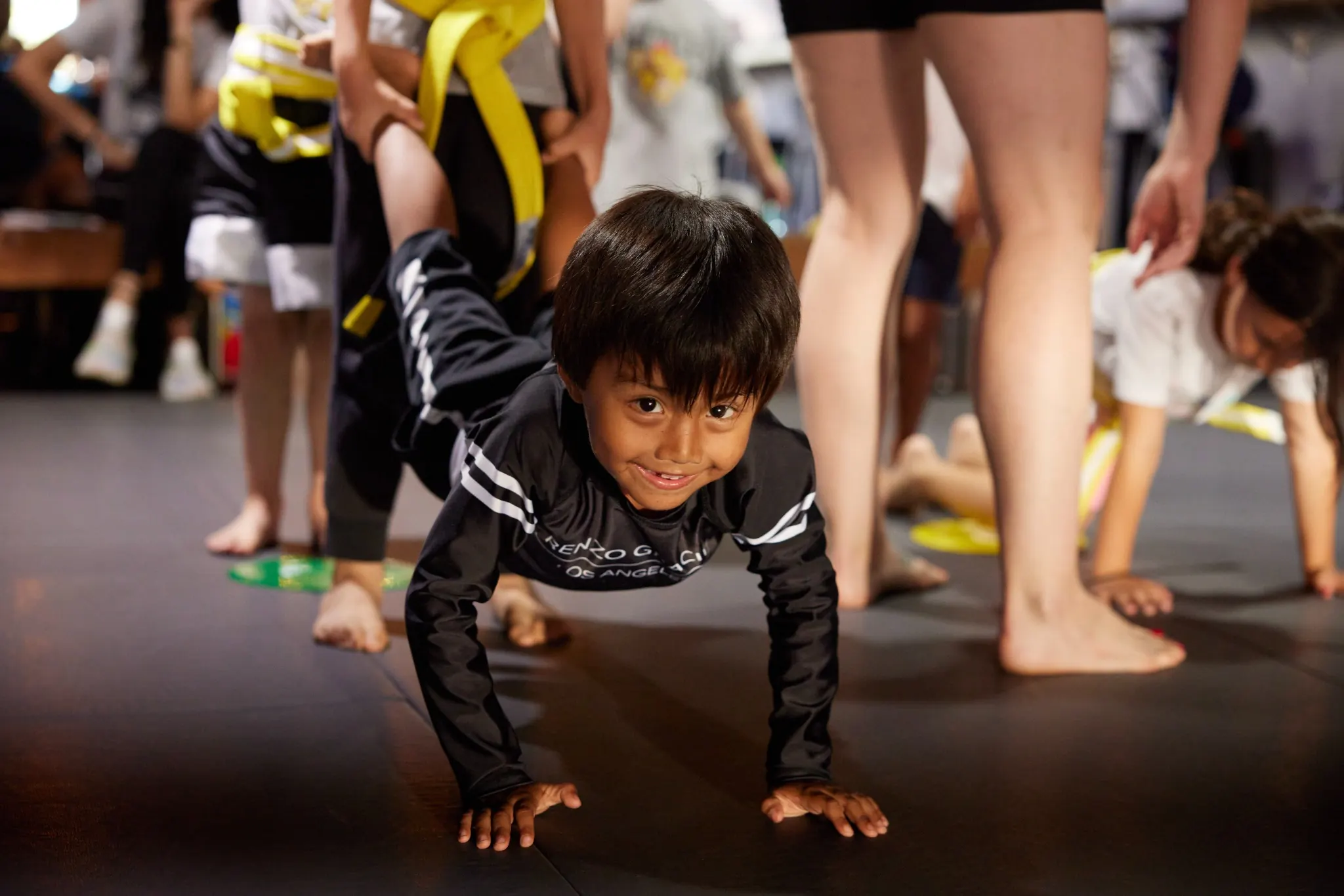
Not at all. Nobody walks in athletic. They walk in as a kid who can't do a forward roll, and months later they're doing cartwheels across the mat during warm-ups. Fitness, coordination and flexibility are the results of training, not the requirements for it.
Martial arts moves the whole body in ways most sports don't. Kicks and defensive movements stretch the hips and legs. Grappling builds grip, core and the odd little muscles that never get used in a classroom chair. The cardio sneaks in through games. Your kid gets stronger, bendier and more coordinated without a single "workout," and that carries over to everything else they do with their body.
The un-athletic kid is often our favorite kind. They've got the most room to grow, and they notice every inch of it.
What are the real benefits of martial arts for kids?
The physical stuff is the easy part. The benefits that make parents keep coming back are the ones that show up at home and at school. Here's how we see them play out:
- Confidence you can measure. Belts and stripes aren't given for attendance. A kid who earns a stripe after months of showing up and drilling learns that effort over time produces results. That lesson transfers straight to homework.
- Focus, discipline and patience. Kids learn to follow a multi-step instruction, wait their turn, and repeat a technique they haven't nailed yet without melting down. Ask any teacher what those three things are worth.
- Respect and self-control. Bowing, shaking hands and stopping at the tap teach a kid that strength comes with responsibility. The eight-year-old who learns to let go when a partner taps is learning to control himself when he's winning. That's rare.
- An outlet for big feelings. Hard physical play burns off stress and releases the feel-good chemistry a screen never will. We've watched anxious kids leave class calmer and angry kids leave tired and happy.
- Resilience. A kid loses a round, gets up, shakes hands, and goes again. Do that a hundred times and you've got a kid who doesn't fall apart when the science fair doesn't go their way. Losing safely, over and over, is one of the best things martial arts gives a child.
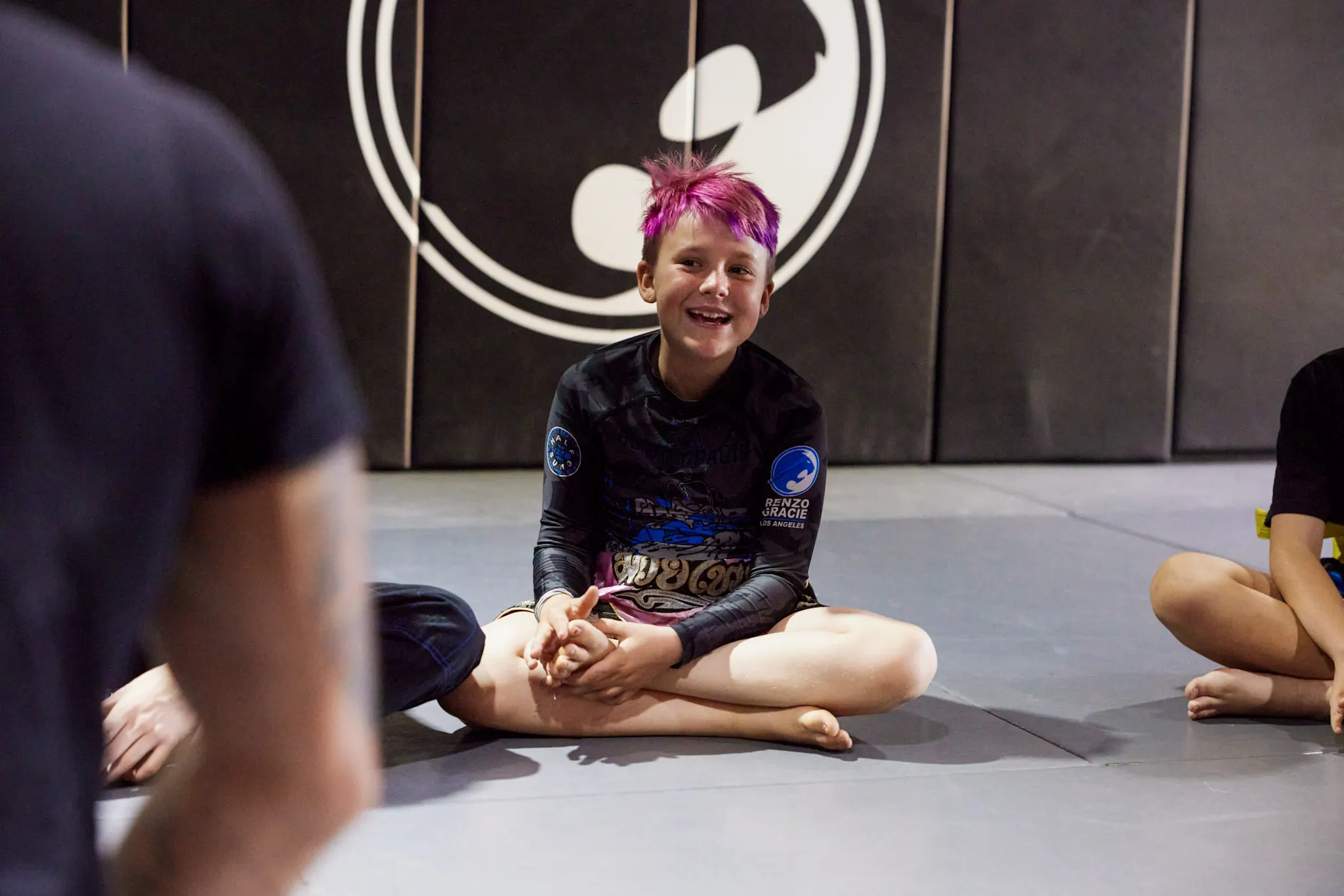
- Leadership. Older kids help the younger ones with their belts and lead warm-ups. The kid who was the smallest in the room last year is now the one showing the new kid how to bow. Watch what that does to a kid's posture.
Muay Thai, jiu jitsu or no-gi: which one for which kid?
Start with the one your kid is most excited about, because the excited kid is the one who keeps showing up. If you're not sure, jiu jitsu is the usual starting point for younger kids, and nothing stops them from adding Muay Thai later.
A rough guide from the front desk. The kid who's getting pushed around usually does best in jiu jitsu, because the whole art is about getting out from under someone bigger. The kid who can't sit still tends to love Muay Thai, where the pads give all that energy somewhere to go. The shy kid often surprises everyone in jiu jitsu: it's quiet, close, and built on drilling with one partner instead of performing for a room. No-gi is jiu jitsu without the uniform, faster and closer to wrestling.
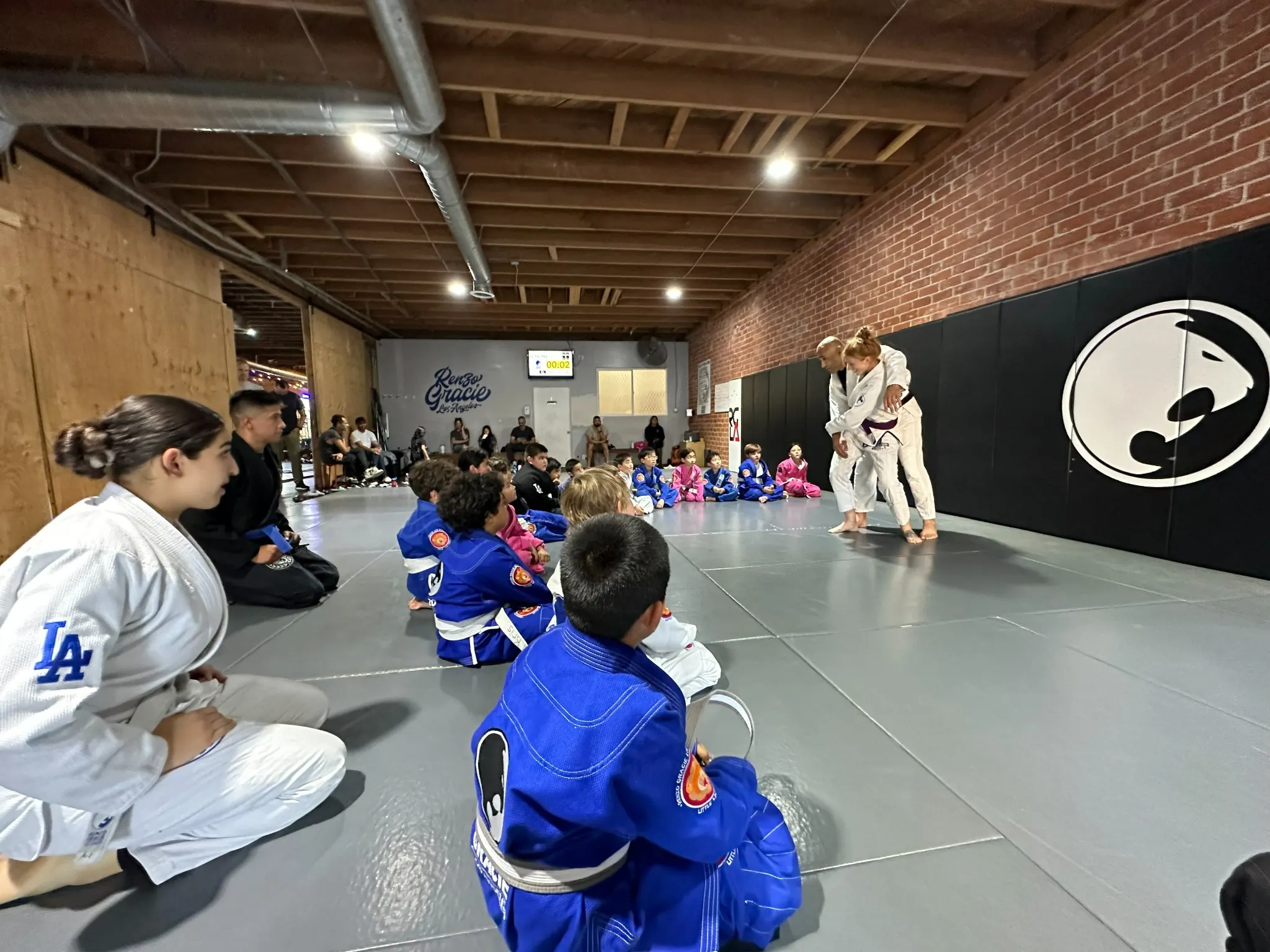
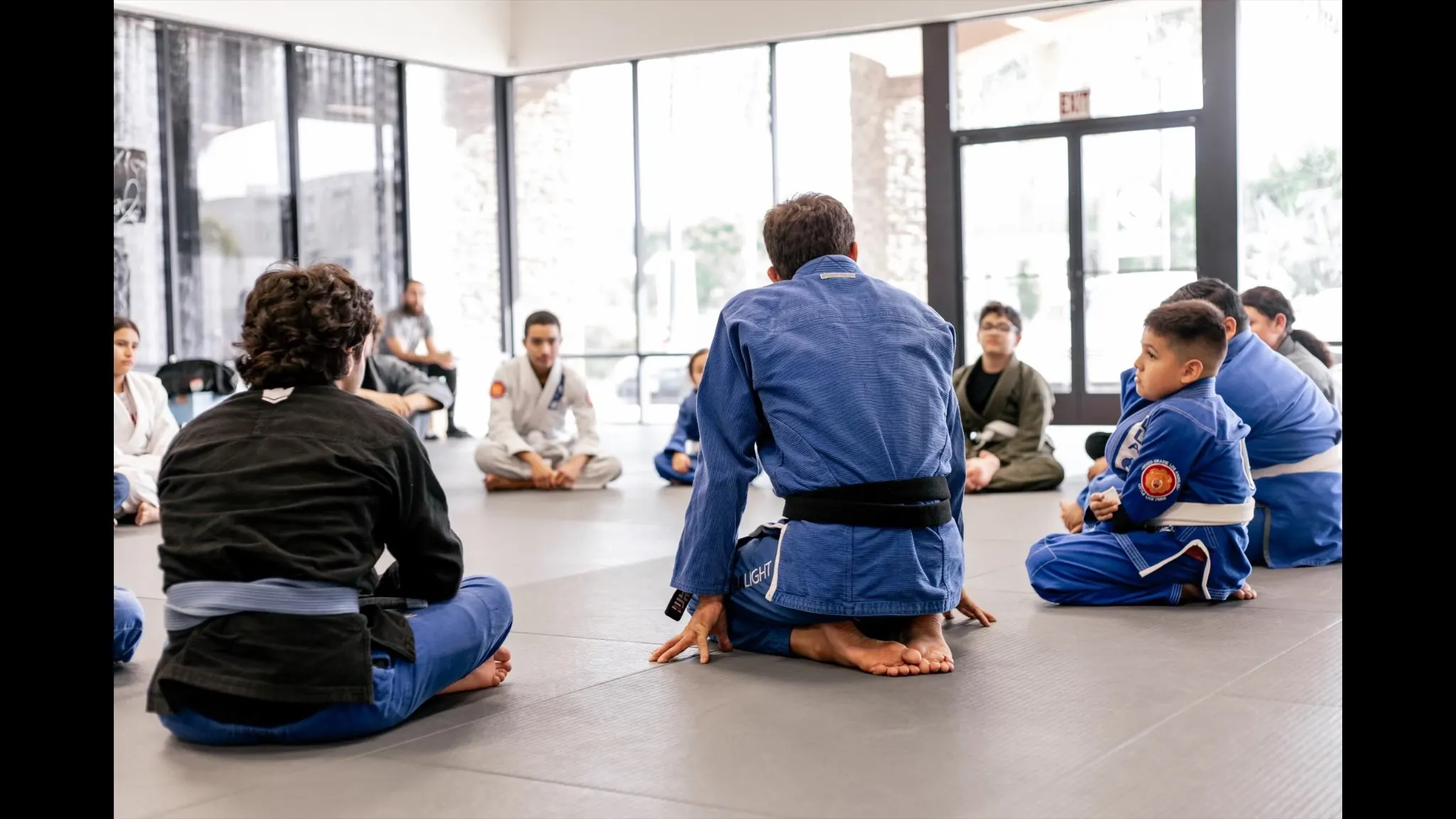
Want to see what a class actually looks like before you commit? We wrote about what Little Lions and Junior Lions are really like, from the parent's chair.
Where the benefits of martial arts for kids really show up
At home and at school, not on the mat. The mat is just where they get built. Our aim at Renzo Gracie LA is to make kids their best on the mats and off them: the kid glued to the screen finds something he'd rather do, the one getting pushed around walks taller, the one who can't sit still learns that focus is a skill, and the shy one finds out she's tougher than she thinks.
Little Lions takes kids 5 to 7, Junior Lions takes 8 to 12, and Teens covers 13 to 17. Nobody has to compete, though if your kid ever wants to, we've written about whether your kid should compete in BJJ too.
The first class is free and there's no contract. Come watch from the parents' chairs, see how the coaches talk to the kids, and decide after. Book a free kids class and bring the kid you're worried about. That's usually the one who surprises you most.
Questions people ask
What age should a child start martial arts?
Our Little Lions program starts at five, which is about when most kids can follow instructions well enough to enjoy a class. Older kids and teens can start any time. There's no such thing as too late, only a kid who hasn't tried yet.
Will martial arts help my kid with bullying?
Usually, and not in the way parents expect. Kids who train rarely need to use it. They stand differently, they stop looking like a target, and they know how to stay calm and get away if they have to. That confidence is the real bully repellent.
How long before I see a difference in my kid?
A few weeks for the small stuff: better listening, more energy burned, calmer evenings. Months for the big stuff like confidence and self-control. In our experience the change is gradual until a teacher or grandparent points it out and you realize it's been happening all along.
Do I need to buy equipment before the first class?
No. Comfortable clothes and a water bottle are enough for a trial class. If your kid sticks with it, they'll need a gi for jiu jitsu and gloves for Muay Thai, and the front desk will point you in the right direction when the time comes.