You've tried the meditation app. You lasted four minutes, then you were thinking about the email you didn't send.
Somebody told you to "just breathe." You breathe fine. The problem is the eleven other things your brain is doing while you breathe.
Sound familiar? Then here's the thing nobody mentions about jiu jitsu: it's the one hour of your day where overthinking is physically impossible. Not discouraged. Impossible.
Short version: Jiu jitsu helps an anxious, overthinking brain because it forces you into the present. You can't worry about your inbox while someone is working toward a choke. Add the tap (a small daily lesson in losing without it being a disaster), the good kind of tired, and training partners you see three nights a week, and most people notice a quieter head within weeks.
Is jiu jitsu good for your mental health?
In our experience, yes, and for a more specific reason than "exercise is good for you." Plenty of things get your heart rate up. Jiu jitsu is different because it takes your whole attention, on purpose, for an hour at a time. Stress, anxiety, focus, mood, resilience. Those are the things students tell us change, and stress is almost always the first one they mention.
One honest thing before we go further. Jiu jitsu isn't therapy, and it's not a replacement for medication if you need it. What it is, for a lot of the people in our adult jiu jitsu program, is the one part of the week where their head finally goes quiet. That turns out to be worth a lot.
Why can't you overthink while someone is choking you?
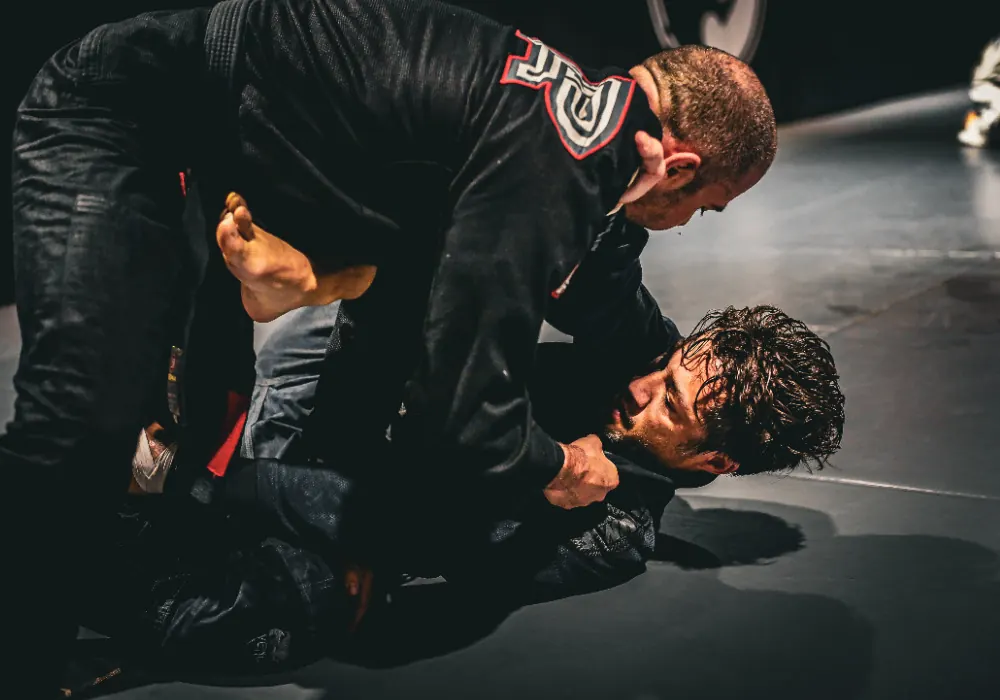
Because your brain doesn't have the bandwidth. When a training partner has your collar and is working toward a choke, there is exactly one problem in the world, and it's attached to your neck. Your rent, your boss, the thing you said at dinner in 2019: gone. Not because you chose to let them go. Because there's no room.
Meditation asks you to bring your attention back to the breath every time it wanders. That's hard, and if you're wired anxious it can feel almost cruel. Jiu jitsu does the bringing-back for you. Your attention drifts, someone passes your guard, and you're back. Every single round.
What does that feel like after class? Most people describe it the same way. Quiet. Like the noise got turned down and nobody told you when.
What does tapping teach an anxious brain?
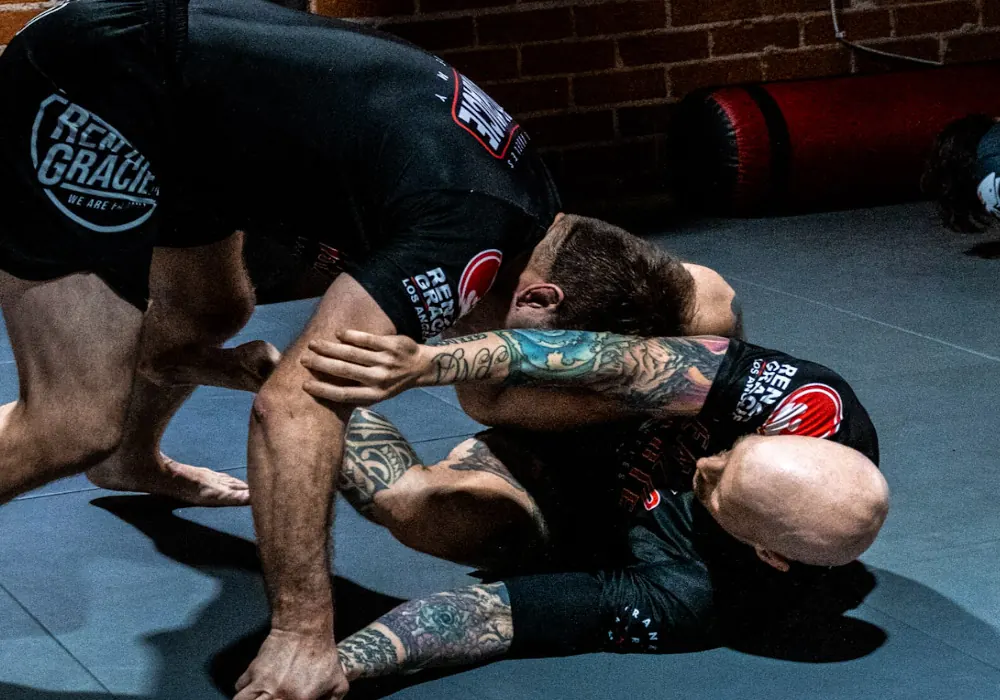
That losing is survivable, and that it's going to happen again in about ninety seconds. The tap is the whole sport in one gesture. Someone catches you, you tap twice, you both reset, you go again. No lecture, no shame, no consequence. On your first day you'll tap more times than you can count, and then you'll go home and eat dinner like a normal person.
If you overthink, you probably also hate being wrong. Jiu jitsu makes you wrong constantly, in a low-stakes way, in front of people who are also wrong constantly. It's a daily rep of the exact thing you're scared of, in a room where it's the normal outcome. Your ego takes a hit, then another one, and after a few weeks you notice the hits don't land the way they used to.
The first time someone chokes you and you tap, something in you braces for it to be a big deal. It isn't. That gap, between what you expected and what actually happened, is where a lot of the relief lives.
How does jiu jitsu help with stress and anxiety?
Two ways: it gives you a puzzle to solve, and it wears you out in a way that actually feels good. Start with the puzzle. Jiu jitsu is problem-solving under pressure. You're pinned, you're uncomfortable, and you have to think your way out with your hips and your grips instead of panicking. That's a skill. It's also the exact skill an anxious brain is worst at: being uncomfortable without spiraling.
Then there's the tired. Not the fried, staring-at-a-screen tired you're used to. The kind where you've fought for grips for six rounds, your forearms are cooked, and you sleep like a rock. Ask anyone who trains regularly what they're like on a week they miss class. Restless, snappy, up at 2am. The body needs somewhere to put all that.
What we see on the mats is that the stress doesn't vanish. It gets processed. You walk in wound up. You spend an hour solving problems with your body instead of your worry loop. The email is still unsent when you get to your car. It just doesn't feel like an emergency anymore.
You walk out with the same life you walked in with. What changes is the nervous system carrying it.
The people you'll grapple with three nights a week
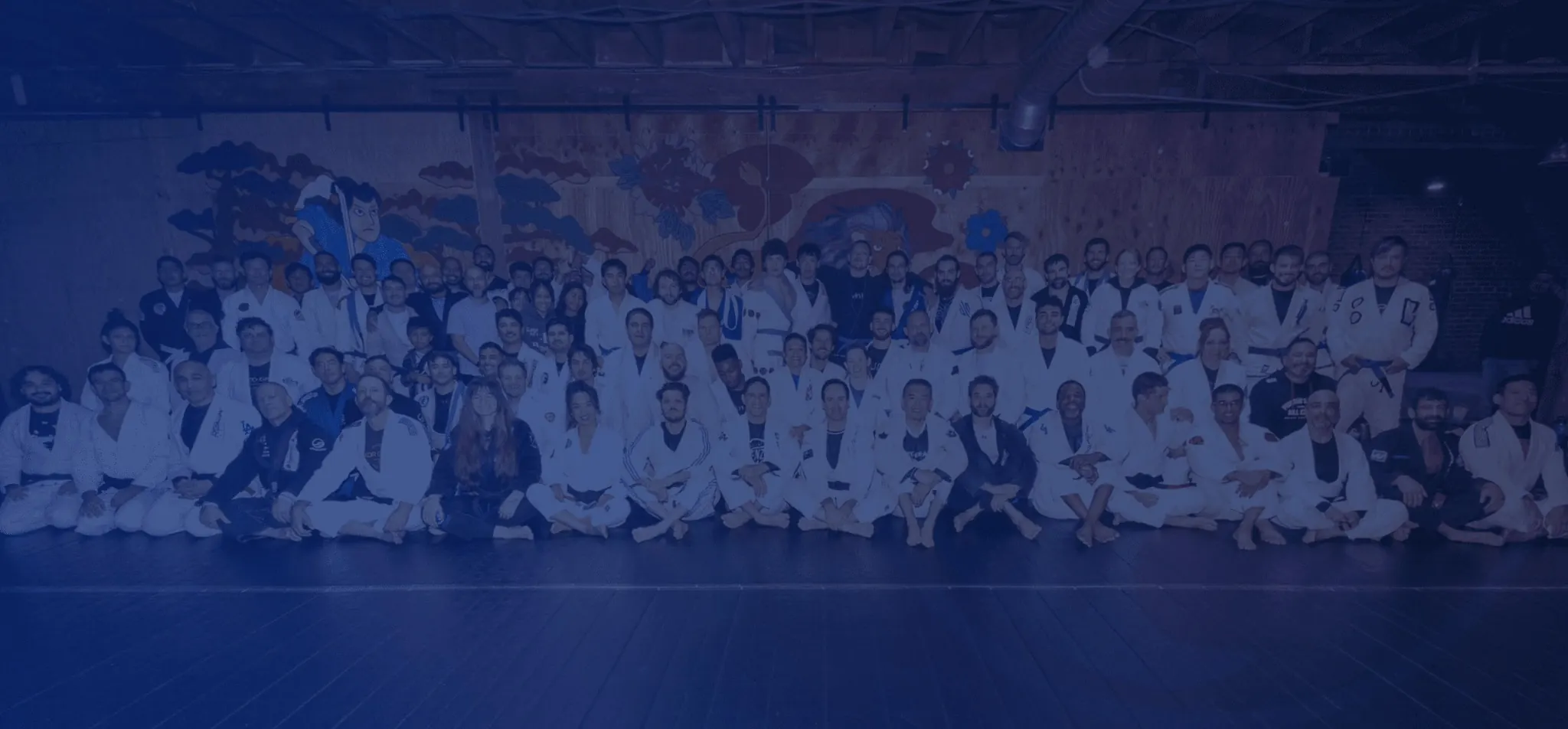
This is the part that surprises people most. You'll make friends, real ones, faster than you have since school. There's something about politely trying to strangle someone three nights a week that skips the small talk. You know who goes hard, who's patient, who's having a bad day before they say a word. It's hard to feel isolated when a room full of people notices you didn't show up Tuesday.
Take the 7am crowd. Professor Armand Rivers runs that class, and the people in it roll together before work, then go sit in traffic and be normal at their jobs. Nobody's there for the workout alone. Watch them after class, still on the mat talking when they should have left ten minutes ago.
Is that a "mental health benefit"? We'd say it's the biggest one. Anxiety loves isolation. Jiu jitsu doesn't let you have any.
How often should you train for it to help?
Two or three times a week, consistently, beats five times a week for a month and then nothing. Most people who walk in here stressed and stay stressed are the ones who train in bursts. The ones who tell us their head is different are the ones who pick their days and keep them.
The schedule runs from 7am to 9pm, so there's a slot that fits a real life. Morning if you want it done before the day gets its hands on you. Evening if you need somewhere to put the day. Pick the one you'll actually keep, not the one that sounds most impressive.
And if you want the wider argument, structure, discipline, hitting pads when you're angry, all of it, we made the wider case for martial arts and mental health in a separate post. This one is just about what jiu jitsu specifically does to your head.
Come see what your head does after one class
You don't have to be in shape. You don't have to know anything. You'll be paired with someone who remembers their first day, and a coach will walk you through it at a pace that makes sense. You'll tap a lot. You'll be tired in the good way. And somewhere on the drive home you'll notice the noise is gone.
That's the whole pitch. Not that jiu jitsu fixes your life. That it gives your brain an hour off, several times a week, from the job of worrying about it.
The first class is free and there's no contract. Book a free class at 5203 Hollywood Blvd and find out what quiet feels like.
Questions people ask
Can jiu jitsu help with anxiety?
In our experience, yes. It forces your attention onto the problem in front of you, so the worry loop gets interrupted for an hour at a time. It's not a replacement for a therapist or medication, but a lot of our students say it's the best hour of the week for their head.
Do I need to be in shape to start?
No. You'll be paired with someone patient and you'll go at your own pace. Most people who walk in here are out of shape and nervous, and that's exactly what the beginner classes are built for. The fitness shows up after a few weeks, not before.
What if I panic when I get pinned?
That's common, and it fades. Early on you tap the moment you feel stuck, and nobody thinks twice about it. Over a few weeks you learn to breathe and work the position instead of thrashing. Tell your partner and your coach on day one; they'll slow the round down.
How soon will I notice a difference?
Most people notice the quiet after class on day one. The bigger changes, sleeping better and being less reactive, show up after a few weeks of training two or three times a week. Bursts don't work nearly as well as a steady routine you keep.