
Somebody who cares about you said it. Your therapist, your partner, the friend who's tired of hearing about your boss. "You need an outlet."
And you nodded, and you thought: a gym isn't going to fix this. I'm not stressed because I'm out of shape. I'm stressed because of my life.
Fair. We're not going to tell you a Muay Thai class fixes your life. We're going to tell you what it does instead, because we watch it happen at the front desk every week, and it's a lot more specific than a poster about endorphins.
Short version: Martial arts helps your mental health in five practical ways: a fixed routine when life feels chaotic, a legitimate outlet for anger and stress (pads exist for a reason), self-discipline that follows you to work, learning to stay calm when you're hit or stuck, and confidence built on progress you can measure. It's not a replacement for therapy or medication. It works alongside them.
Are the mental health benefits of martial arts real?
Yes, in our experience, and not mainly because of endorphins, though those are real. Hard training does release them, and the hour after a class is usually the calmest hour of a stressed person's day. But the endorphins wear off by bedtime. The stuff that lasts is what training does to the way you handle your week.
Let's get the honest part out of the way. Martial arts is not a replacement for therapy, and it's not a replacement for medication if you need it. Anyone who tells you a gym membership does what a doctor does is selling something. What we see is that training makes the rest of it work better. You sleep. You have somewhere to put the stress. You show up to the hard conversations less wound up.
So what actually changes? Five things, and none of them are mystical.
Routine when everything else feels chaotic
The first thing training gives a stressed person is a fixed point. Class is at the same time every week whether you're ready or not, and it doesn't care what happened at work. When your days blur together and nothing ever feels finished, that's not a small thing. It's a wall to lean on.
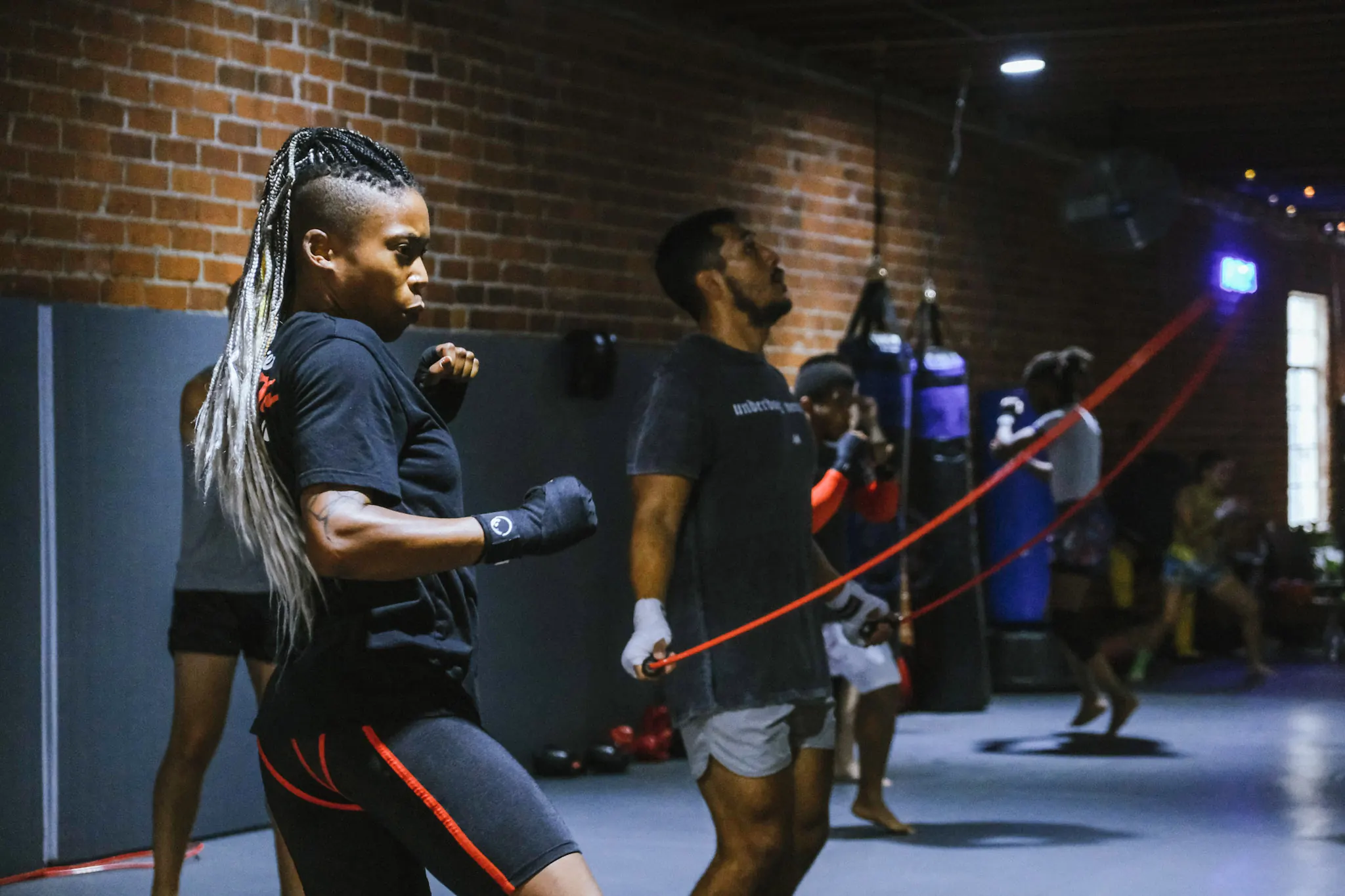
Burnout has a particular shape: everything is urgent, nothing is scheduled, you're always available and never done. Our schedule runs 53 classes a week, seven days, from early morning to 9pm. Pick two slots. Treat them like a dentist appointment. Most people who stick with it tell us the structure was the first thing that helped, before they'd learned a single technique.
Is hitting pads a healthy way to deal with anger?
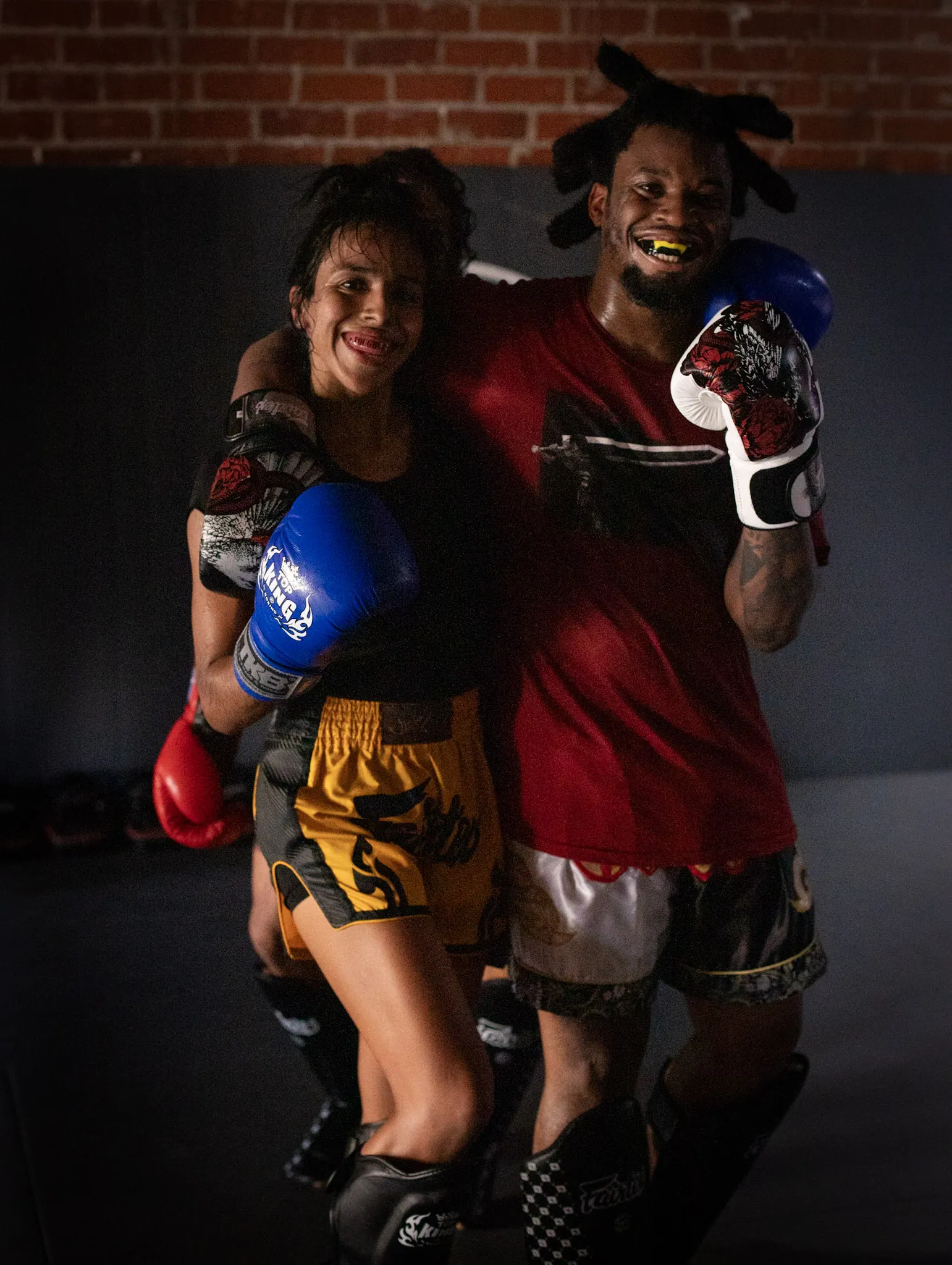
Yes, and it's one of the oldest reasons people walk into a Muay Thai gym. There's a difference between swallowing anger and giving it somewhere to go. Six rounds on the Thai pads with a coach calling combos is the second one. You hit hard, you hit correctly, you hit until your shoulders give out, and then you sit against the wall and there's nothing left to be angry with.
Some people hear "outlet" and worry it means becoming more aggressive. What we see on the mats is the opposite. The people who train regularly in our Muay Thai program are among the calmest in the building, because they've already spent it. The anger came out on the pads, with rules, with a coach, on purpose. It didn't come out on a family member in the car.
Ask yourself where your stress goes right now. If the answer is "nowhere, it just sits there," that's the problem the pads solve.
There's a quieter side to the pads too. Jab, cross, hook, low kick, forty times, while a coach fixes your hip turn. Repetition like that is a moving meditation, the kind of mindfulness you don't have to sit still for. Your head empties out because it's busy counting to four.
How does martial arts build self-discipline?
By making you do the thing you didn't feel like doing, in public, over and over. Discipline isn't a personality trait. It's a habit, and this is a habit machine. You show up when you're tired. You drill the same sweep for the fortieth time. You wash the gi instead of leaving it in the car overnight. (You'll do that once. The smell will teach you.)
The carryover is the part people don't expect. Discipline you build in a gi or in gloves shows up at work, in relationships, and in the goals you keep restarting every January. After three months of finishing rounds you wanted to quit, the report you're dreading looks different. So does the conversation you've been avoiding. You've got proof you can do uncomfortable things and survive them.
What does emotional regulation actually mean on the mats?
It means learning to stay calm when someone hits you or when you're stuck, and it's the most useful thing we teach. The first time a glove touches your face in sparring, your body panics. Every instinct says flinch, freeze, or swing wild. The first time someone pins you flat in jiu jitsu, same thing: your chest tightens and your brain screams get out.
What you learn, slowly, is to breathe there. Keep your hands up. Frame, wait, look for the exit instead of thrashing toward one. That's emotional regulation in the most literal form there is: managing fear, frustration and anger in real time, with a real consequence if you don't. It's practice, and it transfers. The person who can stay composed under mount can generally stay composed in a meeting.
Would you rather learn that skill in a room with a coach and a tap-out, or in an argument that matters?
You don't need to be calm to walk in. Calm is the thing we teach.
Where does the confidence come from?
From progress you can measure, not from being told you're doing great. That's why it holds. A combo that finally lands clean on the pads. A round where you didn't get submitted. A stripe on your belt from a coach who doesn't hand them out. Each one is a receipt. Stack enough receipts and the confidence stops being a feeling and starts being evidence.
Then there's the room. You train with the same people every week, and they see you on your worst days and your best ones. Somebody held pads for you when you couldn't throw a straight jab. Six months later you're holding for the new person. Support isn't something a gym can promise you. It's what happens when you keep coming back to the same mats.
If you want the jiu jitsu-specific version of all this, being choked out of your own thoughts, tapping as ego practice, we wrote a separate post on jiu jitsu and mental health. This one is the wider case.
Pick one class and go
You don't need to pick the "right" one. If you want to hit something, start with Muay Thai. If you'd rather solve problems than throw hands, start with jiu jitsu. Either way, don't go from zero to six days a week and burn out on the thing that was supposed to fix burnout. Two or three classes a week you'll actually keep, and take the rest days seriously.
Keep your therapist. Keep the medication if you've got it. Add an hour where your phone is in your bag and the only thing you have to manage is the person in front of you.
The first class is free, there's no contract, and nobody in the room will care that you're out of shape. Book your free class and find out what an outlet actually feels like.
Questions people ask
Is Muay Thai or jiu jitsu better for stress?
Depends on what kind of stressed you are. If you're angry and need to hit something, Muay Thai pads are hard to beat. If your problem is a brain that won't stop, jiu jitsu forces you to focus on one thing at a time. Plenty of people here do both.
Will martial arts make me more aggressive?
In our experience, no. The students who've trained the longest are usually the easiest people in the building to be around. Aggression with rules, a coach and a timer gets spent on the mats, so it isn't sitting there waiting to come out at home or in traffic.
Can martial arts replace therapy or medication?
No. Training works alongside them, not instead of them. What it does is give you structure, an outlet and better sleep, which tends to make the rest work better. If a doctor has you on something, stay on it and add the training.
How many days a week should I train for my head to notice?
Two or three classes a week, kept week after week, is what works for most adults here. Six days in a row followed by nothing usually ends in burnout or an injury. Pick two slots and don't negotiate with yourself about them.
I'm out of shape and stressed. Won't I embarrass myself?
No one in a beginner class is watching you. They're busy surviving their own round. A coach will pair you with someone who'll go at your pace, and you can rest whenever you need to. Out of shape and nervous is how almost everyone starts here.