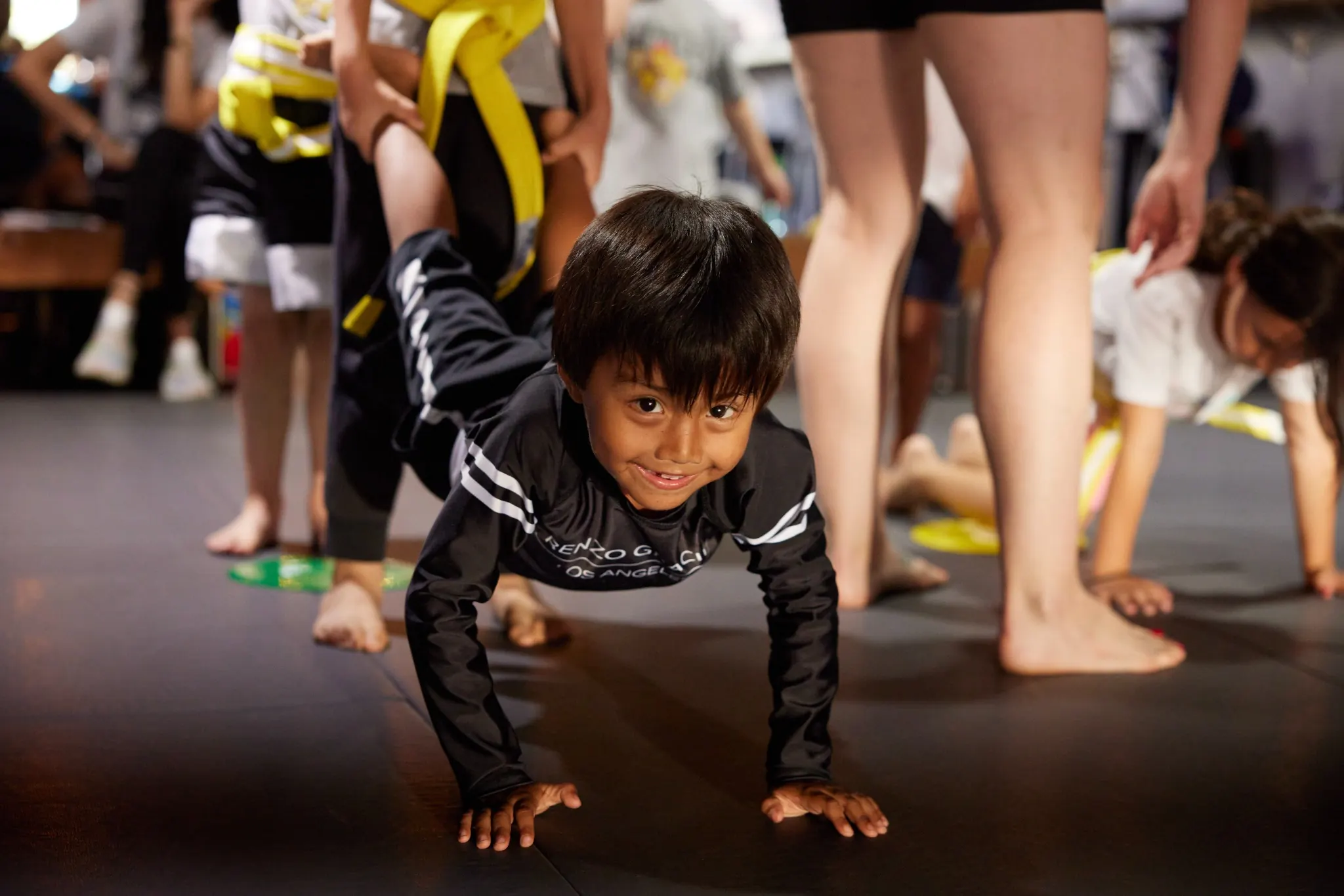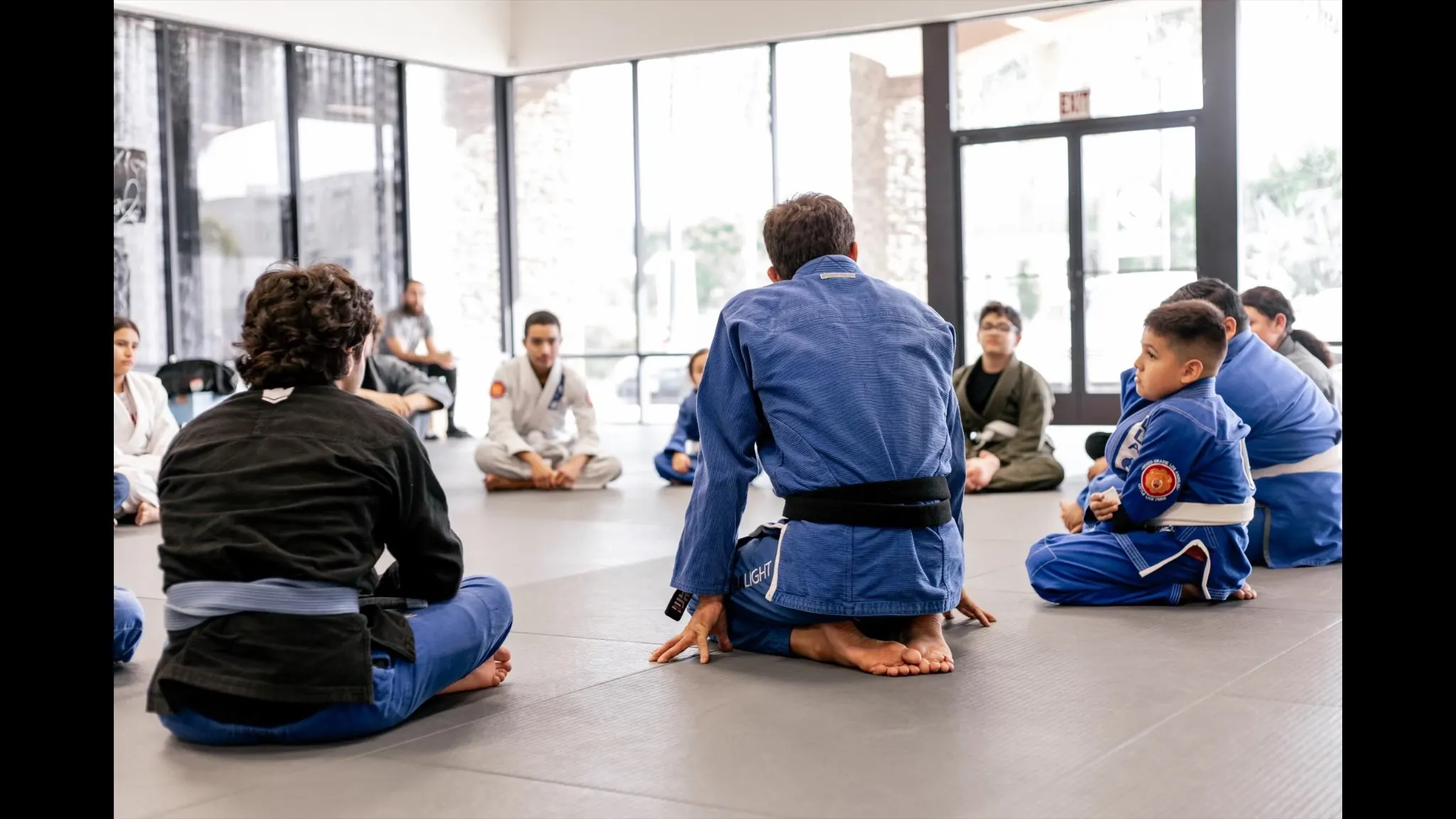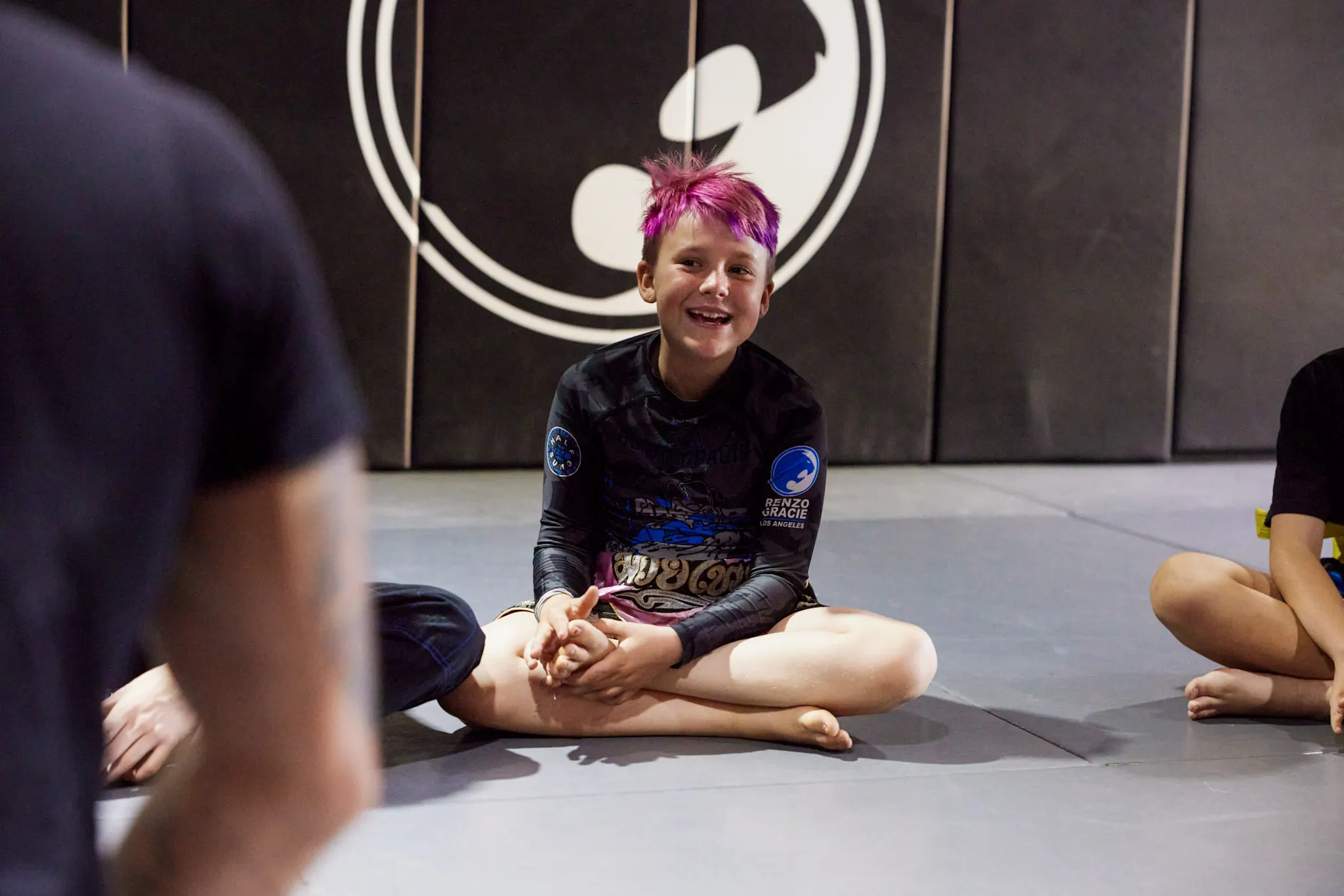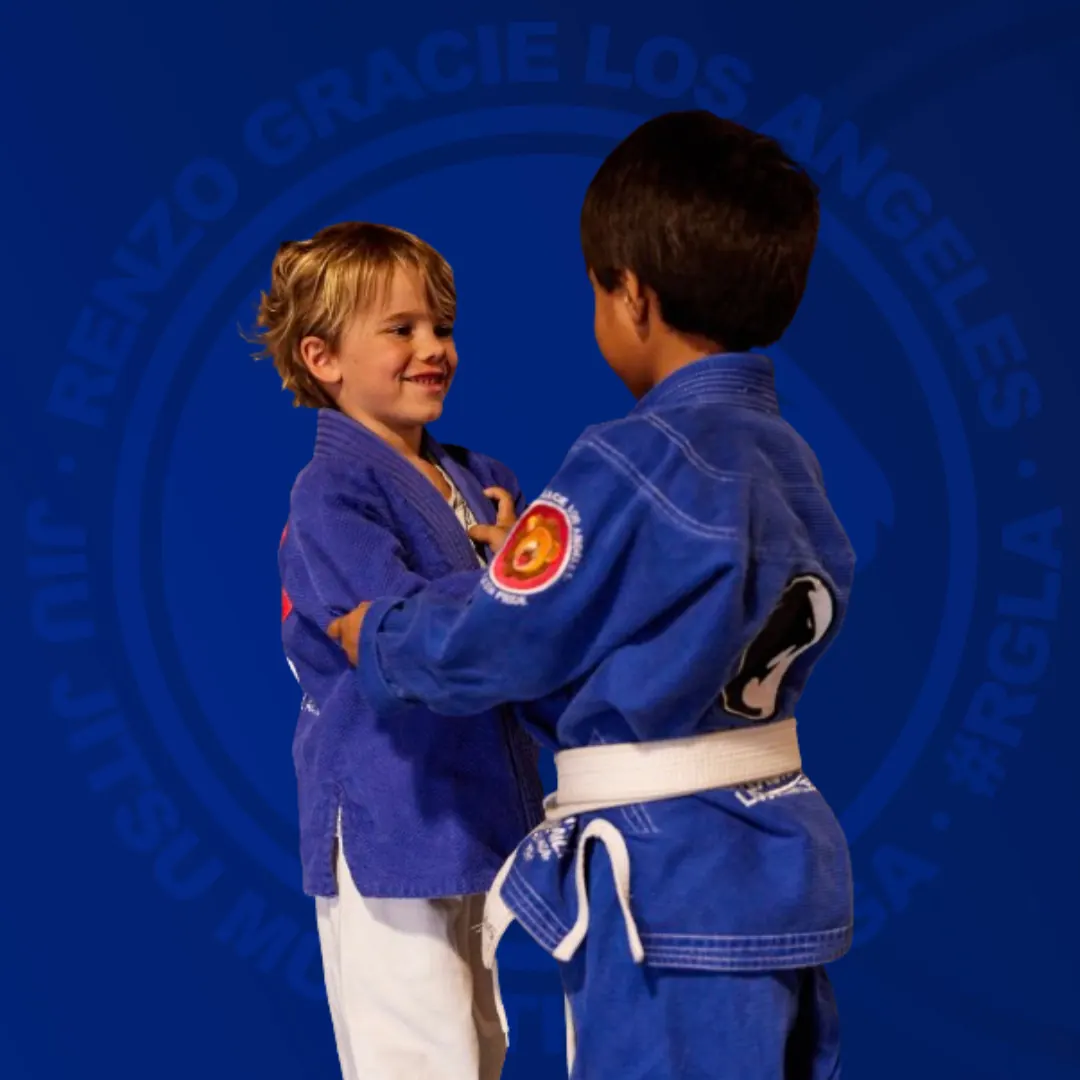
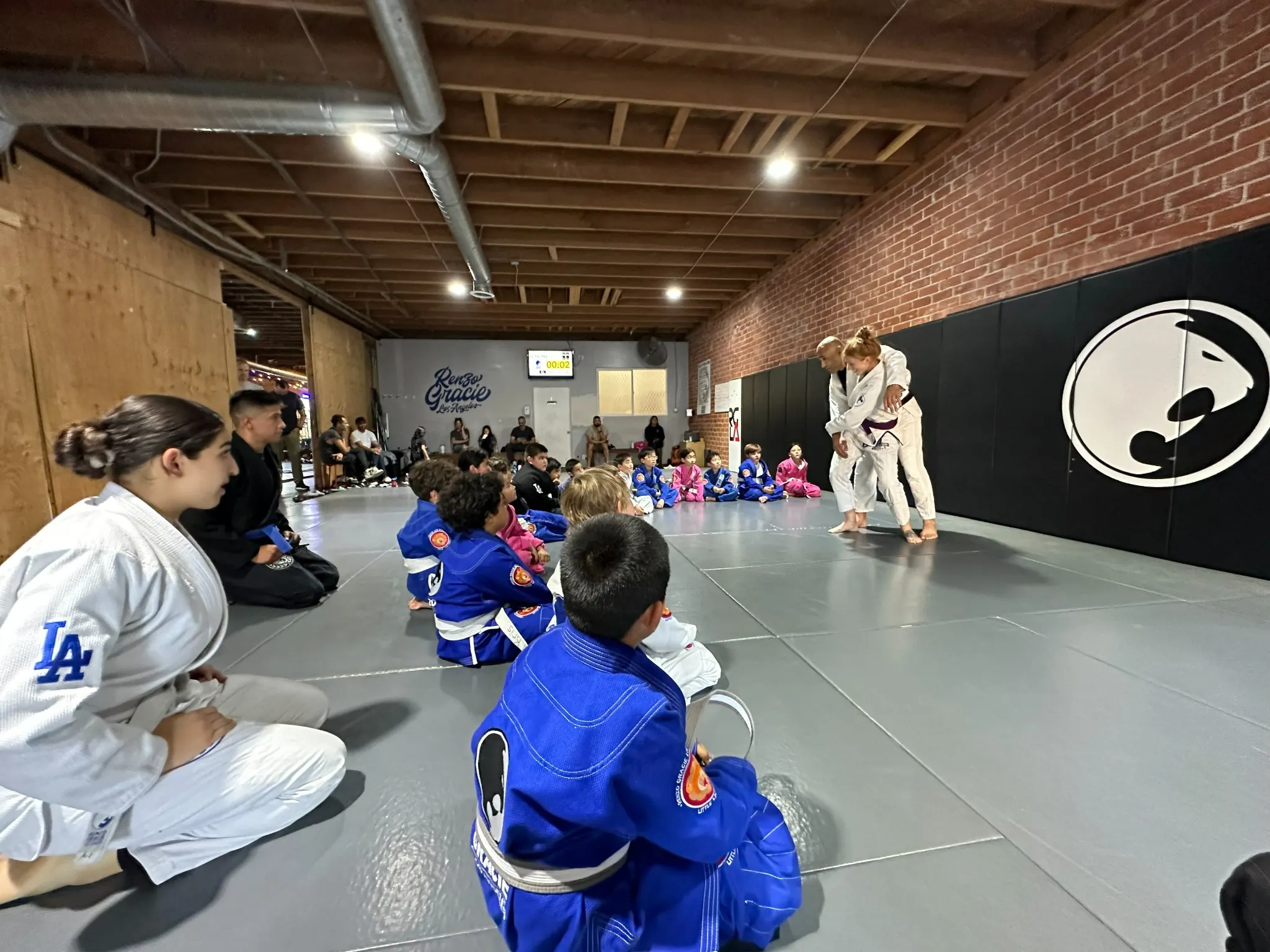
Coach pulled you aside after class and said the words: "There's a tournament coming up. I think your kid is ready."
And your stomach did a little flip. What if she loses? What if he cries in front of everyone? Is this too much pressure for an eight-year-old? Is it safe? And the one you don't say out loud: are we about to become those sports parents?
Fair questions, all of them. Here's how we answer them at the front desk at Renzo Gracie Los Angeles, from a coach who's cornered a lot of nervous kids and sat beside even more nervous parents.
Short version: Competing is optional, and plenty of great kids never do. But a kids BJJ competition is usually a few short matches, a lot of waiting, and lunch after. Kids who try it learn to handle nerves, losing and effort in a way class alone can't teach. Your job on the day is simple: let the coach coach, and praise the effort, not the medal.
Does my kid have to compete in jiu jitsu?
No. Competing is optional, and a lot of the kids on our mats never enter a single tournament. They still earn their belts, still learn to defend themselves, and still turn into focused, respectful, confident kids. Nobody thinks less of a child who trains as a hobbyist.
So why bring it up at all? Because for some kids, a tournament flips a switch. The kid who's been coasting starts showing up early and asking for extra reps. The shy one finds out she's braver than she thought. We suggest competing when we see a kid who'd grow from it, not because we need bodies in a bracket.
If your kid hears "tournament" and lights up, good. If they go quiet and study the floor, that's information too. There's no deadline.
What does a kids BJJ competition day actually look like?
Mostly waiting, with a few very short bursts of action. That surprises parents who picture something out of a movie. Here's the shape of a typical day:
- Weigh-in. Your kid steps on a scale, usually in their gi, to confirm the bracket. For almost every kid it's a formality.
- Waiting. Divisions run behind. Bring water, snacks and a deck of cards. Your kid will sit with teammates, warm up when the coach says so, and ask "is it my turn yet?" eleven times.
- A few short matches. A few minutes each, sometimes less. Your kid might have one match or three, depending on the bracket.
- A medal, or not. Some kids go home with gold. Some go 0-and-1. Both are fine by dinner.
- Lunch. Honestly, this is what a lot of kids remember most. Teammates, parents, one big table, everyone comparing stories.
No cage, no chanting crowd, no blood. Just kids in gis and parents holding their phones sideways.
Is a kids jiu jitsu tournament safe?
Yes, for a kid who trains regularly. Kids' tournaments are refereed, rule-limited and stopped fast. Kids' rule sets strip out the more dangerous submissions. The referee stands right next to them and stops the match at a tap, a cry, or anything that looks wrong. Coaches are mat-side.
Can a kid get a scraped knee or a sore neck? Sure, same as at soccer. But what we usually see is the opposite of what parents fear: two nervous, careful kids, a referee one step away, and a coach on the edge of the mat. It's less rough than a hard round of playground tag.
The bigger risk, in our experience, isn't physical. It's a parent who turns the day into an exam. More on that in a minute.
What do kids get from competing that class can't give them?
Real stakes, at a size a kid can handle. In class, your kid rolls with friends who go easy on each other. At a tournament, the other kid is a stranger who wants to win. That changes everything.
Here's what we watch happen, year after year:
- Confidence that's earned. Walking onto a mat alone while people watch takes guts. A kid who does it once knows something about themselves they didn't before. It shows up at school when a hand goes up.
- Discipline with a reason. "Practice your escapes" means more with a date on the calendar. Kids show up on time, drill the boring stuff and eat a real breakfast. The prep teaches focus better than any lecture.
- Fitness that sneaks up on them. Kids getting ready for a tournament move more, breathe harder and recover faster. They won't notice. You will.
- Losing, and surviving it. Class rarely hands a kid a clean loss. A tournament does, in front of people, and then life goes on. It's the most useful thing on this list, and it gets its own section below.
- Sportsmanship you can see. Bowing to an opponent, thanking a ref, congratulating the kid who just beat you. We drill respect every class. Competition is where it gets tested.
- Friendships and a team. Tournament kids become a crew. They cheer for each other, share snacks and stick together in the bleachers. Look at the group on our teens' wrestling trip. That's what tournament kids grow into.
- Goals that mean something. "I want to win a match by Christmas" is a goal a kid can own. Hit or miss, they learn to aim at something and work for it.
Would your kid get some of this from class alone? Sure. All of it, this early, at this intensity? Probably not.
How to be a good tournament parent
Stay in the bleachers, keep your voice warm, and let the coach coach. That's the whole job, and it's harder than it sounds when your kid is stuck under someone's side control.
A few rules we ask every parent to follow:
- Don't coach from the sideline. Your kid can process one voice. If you're yelling "bridge!" while the coach yells "frame!", the kid freezes. The coach has a plan. Trust it.
- Praise the effort, not the outcome. "You kept fighting the whole match" lands better than "you should've won." Kids repeat what gets praised.
- Keep your face calm. Kids look at their parents between matches. If you look terrified, they get terrified. Look proud instead. You are.
- Don't blame the ref, the bracket or the other kid. Even when you're right. Especially then. Your kid is learning how to lose by watching you.
- Feed them, hug them, go home. Skip the car-ride breakdown of what went wrong. Coach will cover it at the next class, once the emotion has drained out.
Your kid will forget the bracket by Tuesday. They'll remember how you looked at them when they walked off the mat.
What if my kid loses?
Then they lost a jiu jitsu match, which is one of the most useful things that can happen to a nine-year-old. Every kid who competes loses eventually. Every one, including the ones who grow up to be world champions.
What you're really asking is, "Will it crush them?" In our experience, no, as long as the adults handle it well. The kid loses, cries for ninety seconds, shakes the other kid's hand and eats a sandwich. Coach says "good match, here's what we'll work on." You say "I'm proud of you." The kid files it under "hard thing I did" and moves on. Most want to sign up again within a week.
A tournament loss is a small, safe, supervised version of a lesson life is going to teach them anyway.
How to decide, and how to start
Ask your kid. Then ask the coach. Those two answers tell you almost everything. If both say yes, sign up for one tournament, set your expectations at "let's see what it's like," and watch what happens.
Not ready? Keep coming to class. Our Little Lions (ages 5 to 7), Junior Lions (ages 8 to 12) and Teens programs are built for hobbyists first. The benefits of martial arts for kids show up with or without a medal, and the option to compete never expires.
Not training yet? The first class is free, no contract. Book a free kids class and see what the mats are like before anyone says the word "tournament."
Questions people ask
What age can kids start competing in BJJ?
It depends more on the kid than the birthday. Most tournaments have divisions for young children, but we look for a kid who trains consistently, knows the basic rules, and actually wants to compete. Ask your coach. If they say "not yet," that's a good answer too.
How long is a kids jiu jitsu match?
Short. Kids' matches at most tournaments run just a few minutes, and many end sooner when someone taps or the referee stops it. The waiting between matches is usually far longer than the matches themselves, so bring snacks and something to do.
What should my kid eat before a BJJ tournament?
A normal breakfast they've eaten before. Tournament morning is not the day to try something new. Pack water and easy snacks for the wait, and plan on a real lunch after. Don't let a nervous kid skip eating; a hungry, jittery kid doesn't move well.
Can my kid keep training if they never want to compete?
Absolutely. Plenty of kids in our program never compete, and they earn belts, learn self-defense and build confidence just the same. Competition is optional at Renzo Gracie LA. If your kid changes their mind later, the option is always there.