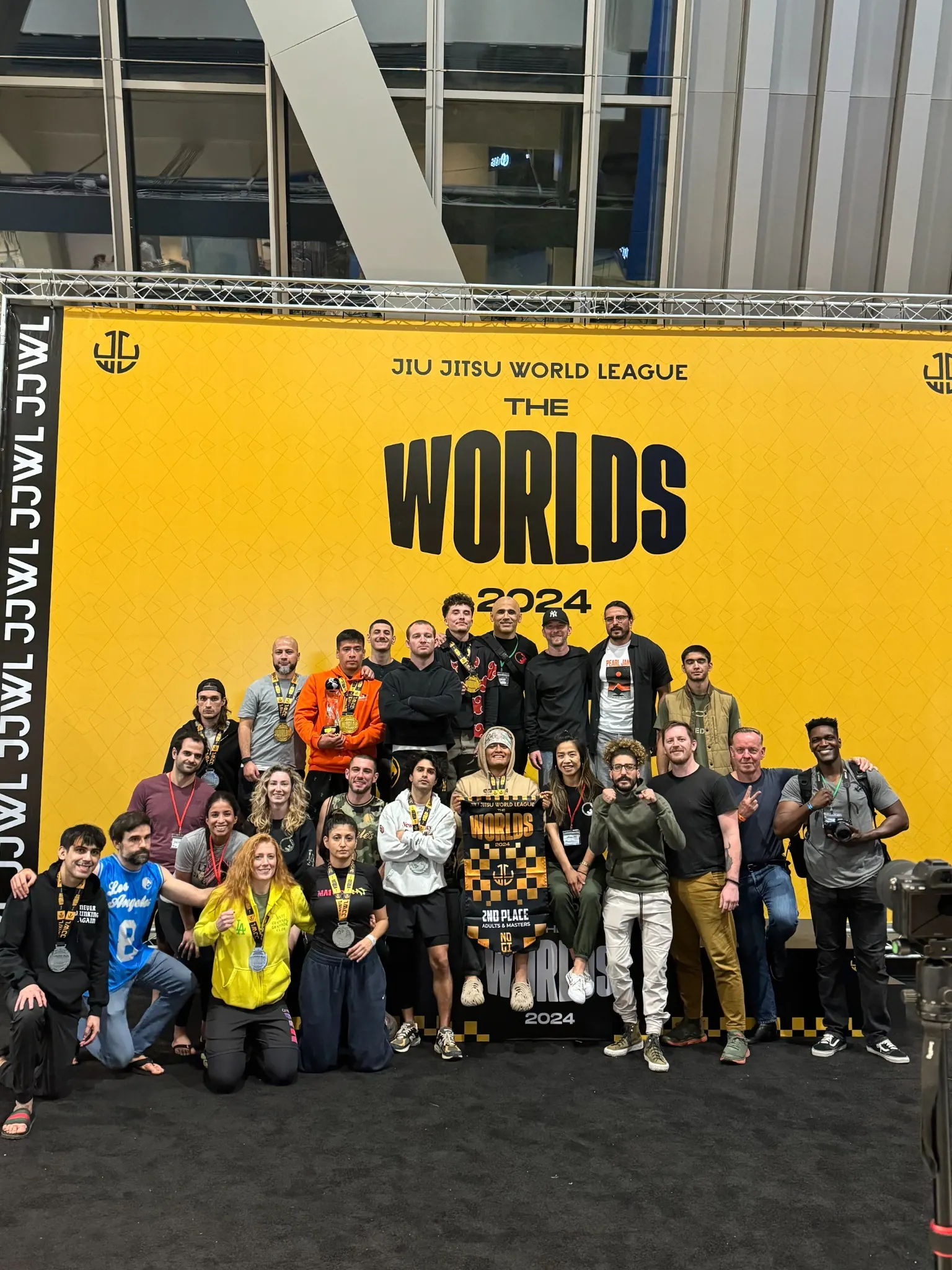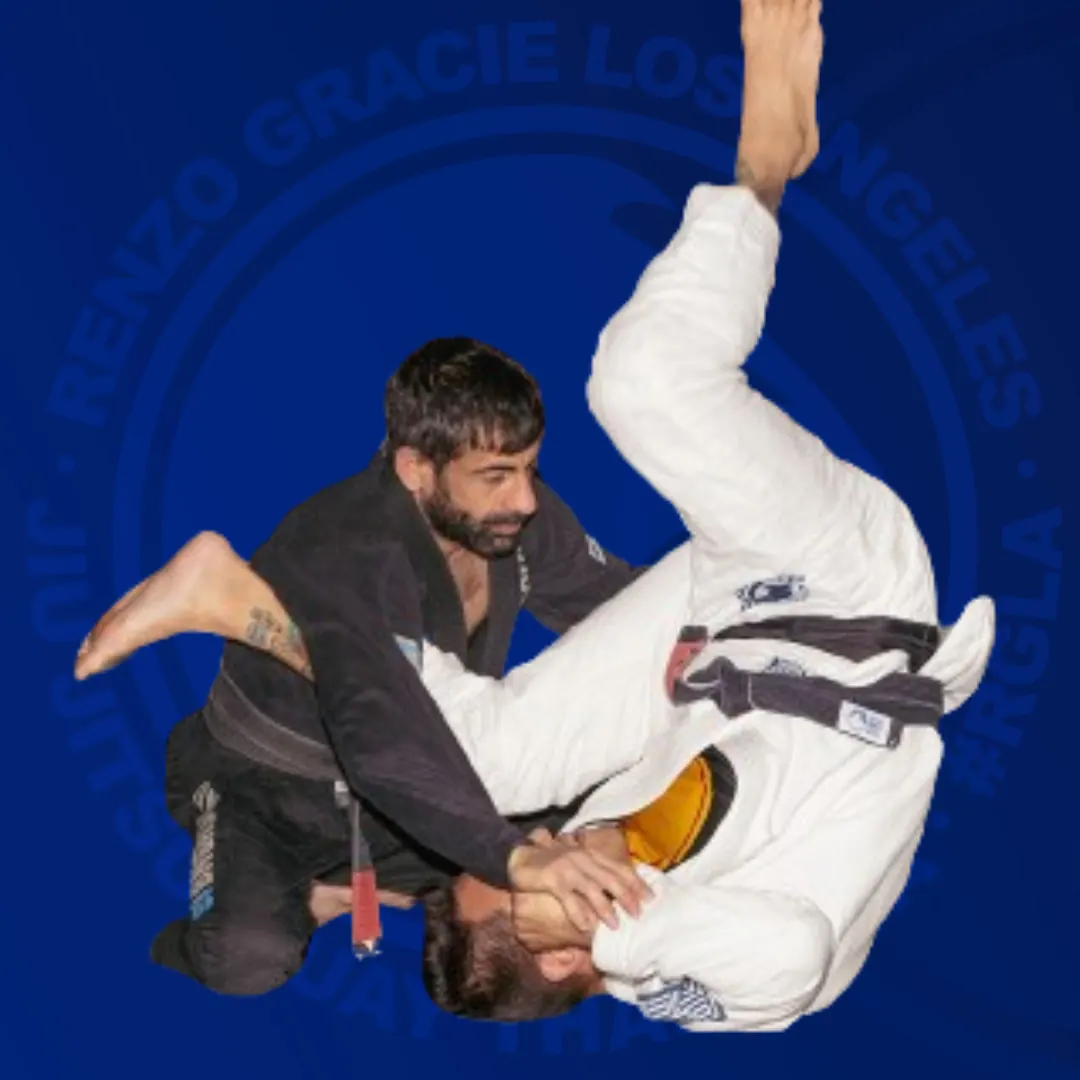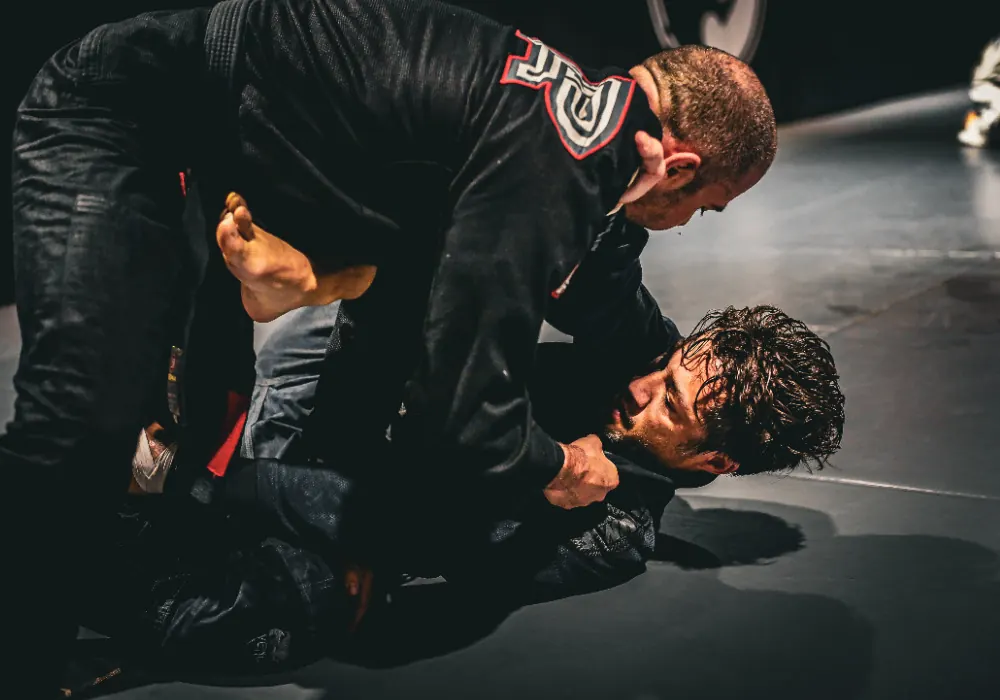
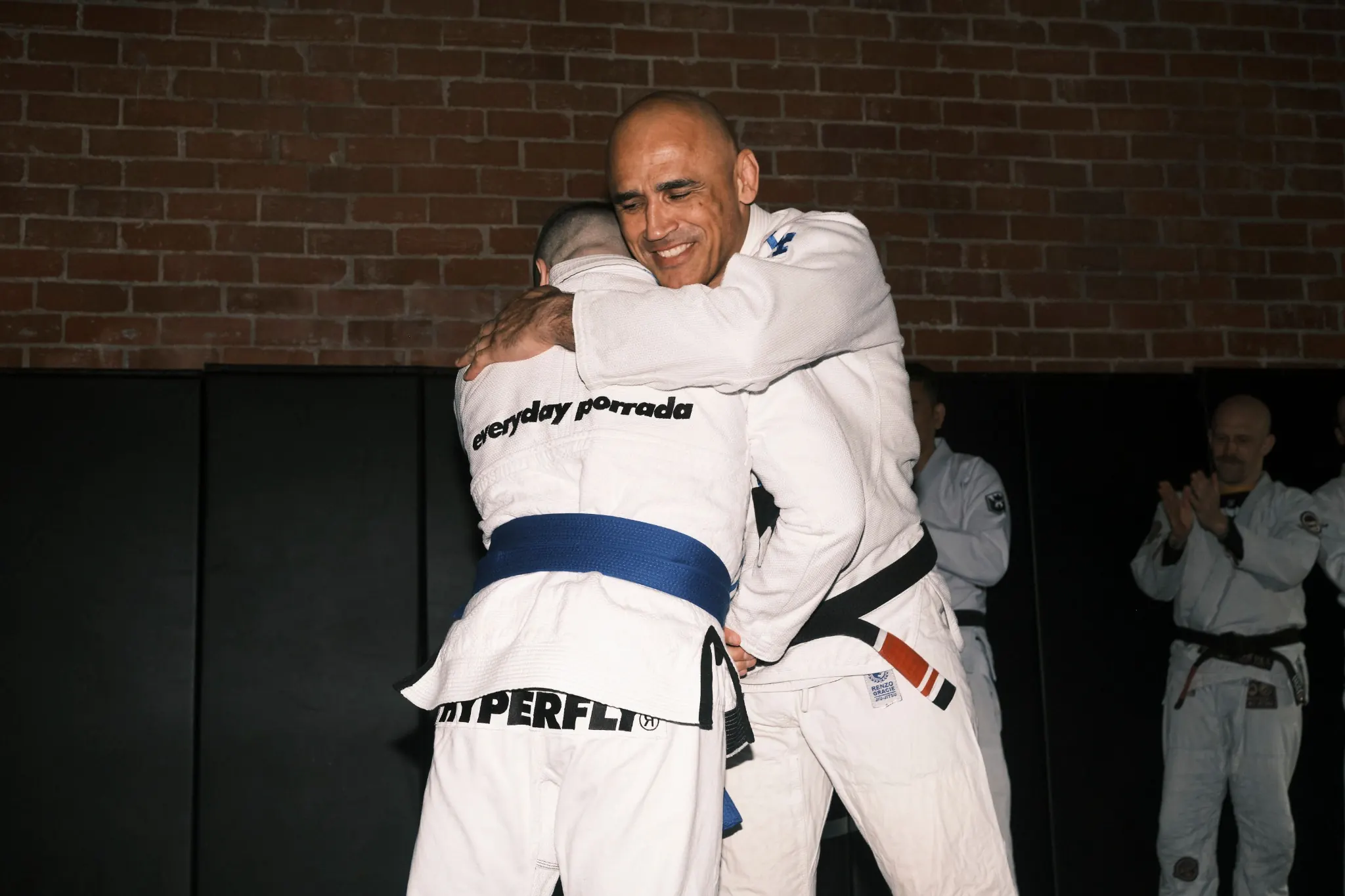
If you train here, or your kid does, you know Coach Jon Quero. He teaches in our kids jiu jitsu program, and he competes. A lot of coaches say that. Here's what it looks like when it's true.
In July 2024, Coach Jon competed at the IBJJF International Open. He entered two divisions: his own weight bracket at 162 lb, and the open class, where there's no weight limit at all.
He won both. Four matches, four wins, two gold medals.
That's what "double gold" means. Here's why it matters more than it sounds.
Short version: Coach Jon Quero won double gold at the IBJJF International Open: first place in the 162 lb bracket and first place in the open class, going 2-0 in each. He won on guard passing, a submission, points from sweeps against a bigger opponent, and an armbar in the open class final. He teaches kids jiu jitsu here at RGLA.
What is the IBJJF, and why does a medal there count?
The IBJJF is the International Brazilian Jiu-Jitsu Federation, the main tournament organization in the sport and the one most people mean when they say "a real tournament." Same rules everywhere, trained referees, strict brackets. Nobody wins one of these by accident.
What that means if you're new: an IBJJF bracket is full of people from other academies who have never rolled with you. In class, your partners know your game. In a tournament, they don't care. They came to win too. So when a medal comes home from an IBJJF event, it's proof the jiu jitsu works on strangers.
What does "open class" mean in jiu jitsu?
Open class means no weight limit. Competitors from every weight bracket can enter, so a guy at 162 lb can draw an opponent from two, three or four weight classes up. You don't get to pick. You fight whoever's standing across from you.
Ever had a bigger training partner sit in your guard and just lean? Now picture that in a final, with a referee and a clock. Size is real. The only way past it is better position, better timing and a calmer head than the other guy.
How did Coach Jon win the 162 lb bracket?
He went 2-0, and both wins came from the basics he drills in class. His first match was won on guard passing and positional control, which in plain terms means he got past his opponent's legs and kept the position once he had it. If you've ever been flattened under side control and felt the ceiling getting closer, you know what that looks like from underneath.
His second match ended by submission. That's the cleanest way a jiu jitsu match can end. The other guy taps, the referee waves it off and there's nothing to argue about.
How did he take gold in the open class?
Again 2-0, this time against bigger opponents. In the first open-class match he won on points, built through sweeps and transitions against a larger opponent. A sweep is when you're on the bottom and reverse the position to end up on top. Doing that to someone heavier, under tournament pressure, is a whole different level of hard.
The final ended with an armbar: isolate one arm, control it with your hips, extend the elbow until your opponent taps. Simple to describe. Not simple to land on a bigger, stronger competitor in a gold-medal match.
What his students can take from it
The lesson isn't "be Coach Jon." The lesson is that what won those four matches is the same stuff he makes you repeat in class: pass the guard, hold the position, finish when it's there. There's no secret move. There's the boring, correct thing, done better than the other person does it.
A few things worth sitting with:
- Position before submission. Two of his four wins came from passing, control and points. The other two were submissions, which almost always start from a dominant position anyway.
- Size is a problem you solve with technique. The open class doesn't reward strength. It rewards whoever stays calm enough to use the other guy's strength against him.
- Nobody does this alone. Training partners and coaches put work into both of those medals. Every hard round in the room is somebody helping someone else get ready.
Does that mean you should compete? Not necessarily. But it does mean the coach correcting your grip has tested that grip somewhere it counts.
Come train with the coach who did it
Coach Jon teaches in our kids jiu jitsu program here on Hollywood Blvd. If your son or daughter is between 9 and 12, Junior Lions is where to start. If you've ever wondered whether your kid's coach can actually do what he's teaching, there's your answer. Two of them. Both gold.
Congratulations, Coach Jon. Two brackets, four wins, zero losses. We're proud of you, and the kids are going to be talking about it for weeks.
Want to see what a class with a champion looks like? Your first class is free, no contract. Book a free class.
Questions people ask
What is the open class in an IBJJF tournament?
It's the no-weight-limit division. Competitors from every weight bracket can enter, so a 162 lb competitor might face someone from a much heavier bracket. Winning it means your technique held up against size, which is why double gold (weight class plus open class) is respected.
Does Coach Jon Quero teach at Renzo Gracie Los Angeles?
Yes. Coach Jon teaches in our kids jiu jitsu program in Hollywood and leads the no-gi classes at our East LA sister academy. He's an active competitor, so what he teaches is what he's using in tournaments right now.
Do I have to compete to train here?
No. In our experience, most people who train here never compete and never plan to. Competition is one path; fitness, self-defense and stress relief are others. If you do get curious, the coaches will tell you honestly when you're ready.