Maybe it's the five-year-old who hasn't stopped moving since breakfast. Maybe it's the twelve-year-old who thinks every sport is boring. Or maybe it's the kid who already does soccer and piano and just asked, with big eyes, if she can try jiu jitsu too.
Whichever one is yours, you've got the same question: what actually happens in a kids' martial arts class? Not the brochure version. The real one, from the parent's chair by the wall.
Short version: Little Lions (ages 5 to 7) and Junior Lions (ages 8 to 12) are our kids' jiu jitsu and Muay Thai programs in Hollywood. A class is a warm-up game, a technique, partner drills and a bow at the end. Nobody has to compete. Parents are welcome to stay and watch, and the first class is free.
What are Little Lions and Junior Lions?
They're the two kids' programs at Renzo Gracie Los Angeles, split by age. Little Lions is for kids 5 to 7. Junior Lions is for kids 8 to 12. Both teach jiu jitsu and Muay Thai, and both are built for regular kids, not future champions. Teenagers 13 to 17 have their own Teens program, which is where the "sports are boring" kid tends to end up surprising everybody.
Why split by age? Because a five-year-old and an eleven-year-old need completely different classes. The little ones need games, short instructions and a lot of movement. The older ones can handle real technique, longer drills and a bit more accountability. Put them in the same room and one group is bored while the other is lost.
What does a kids jiu jitsu class in Los Angeles actually look like?
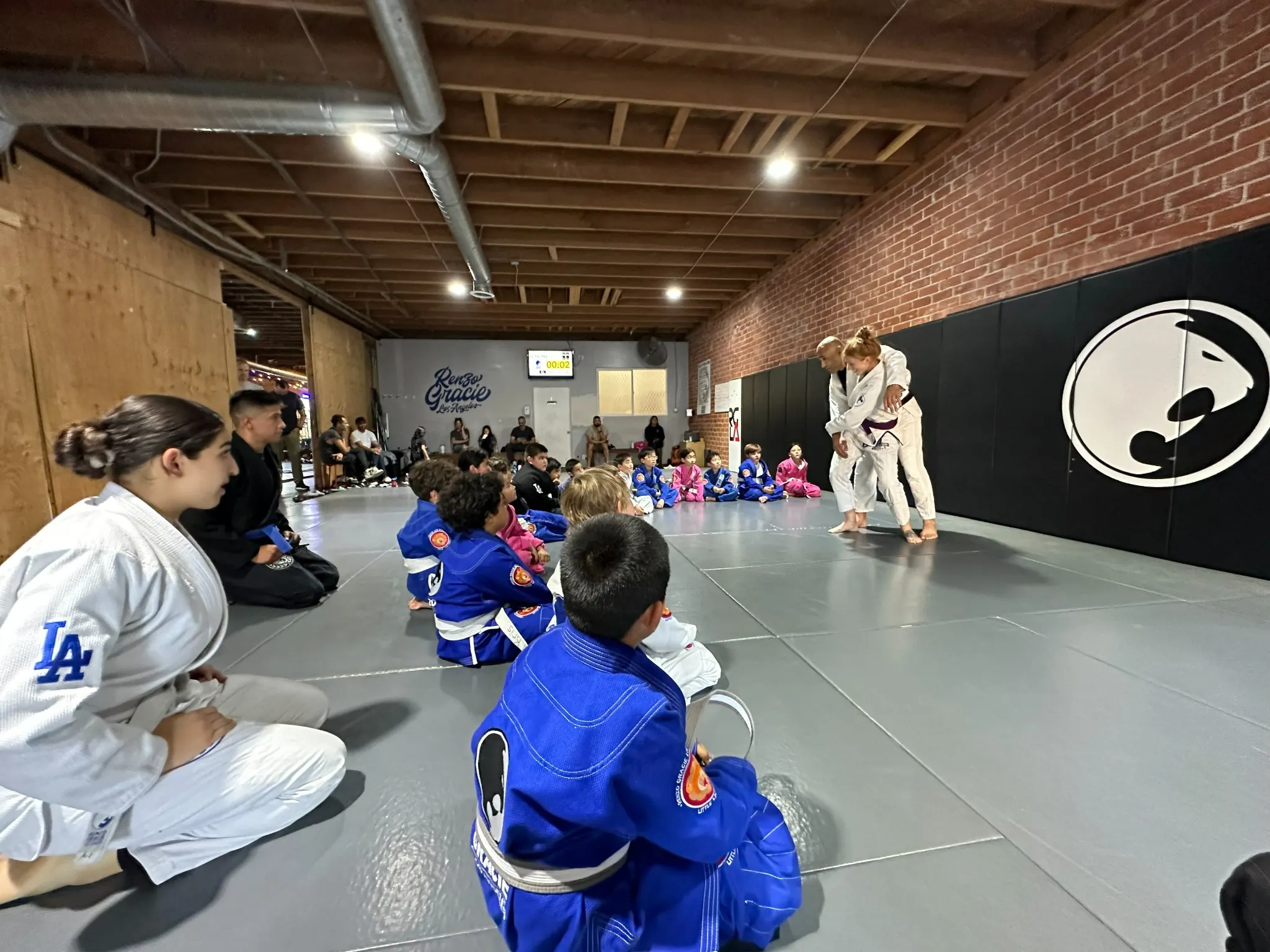
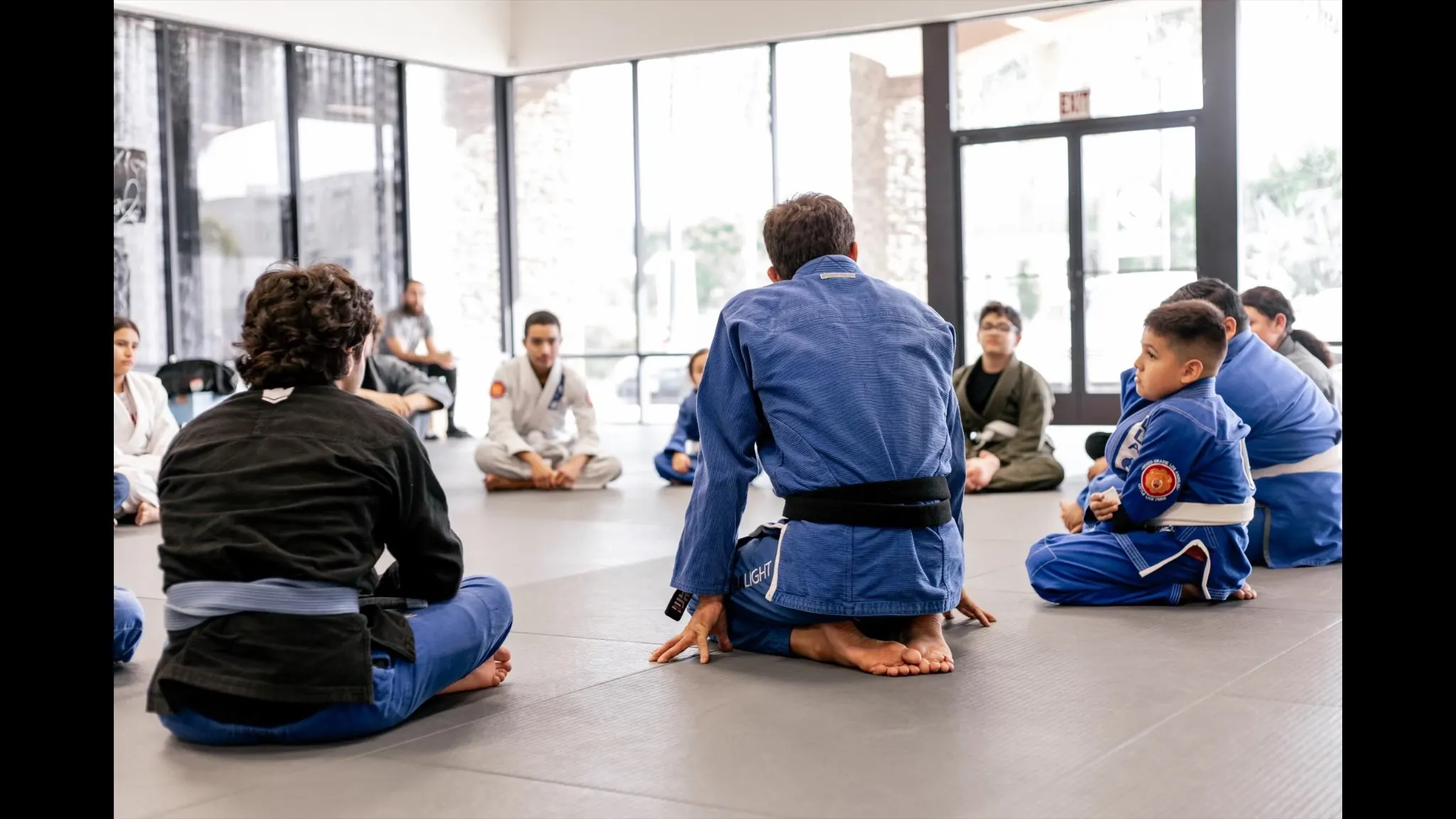
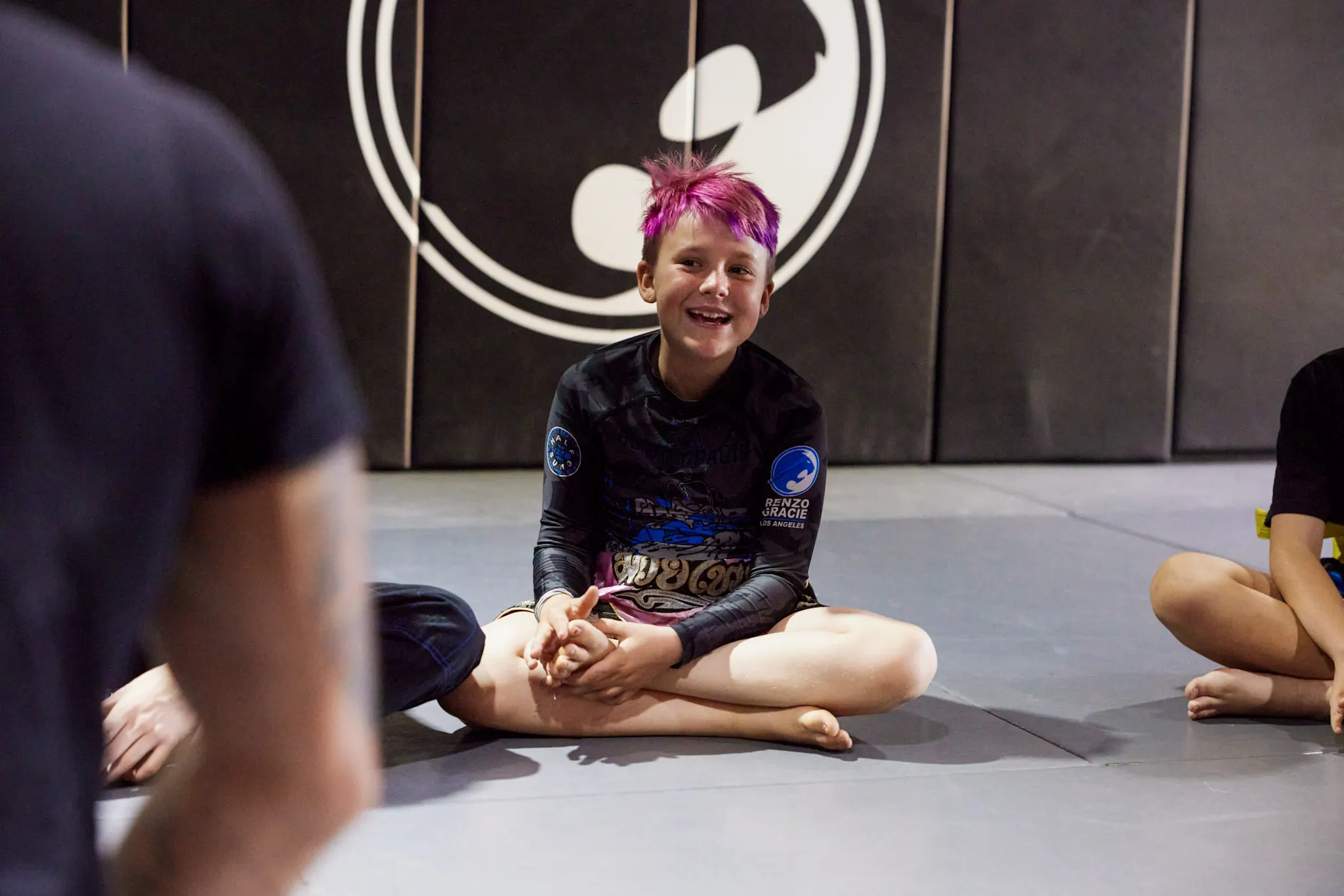
From the parent's chair, a class looks like this: kids line up and bow, they play a warm-up game that's secretly conditioning, the coach shows a technique, they drill it with a partner, and they bow out. Controlled chaos with a clear structure underneath it.
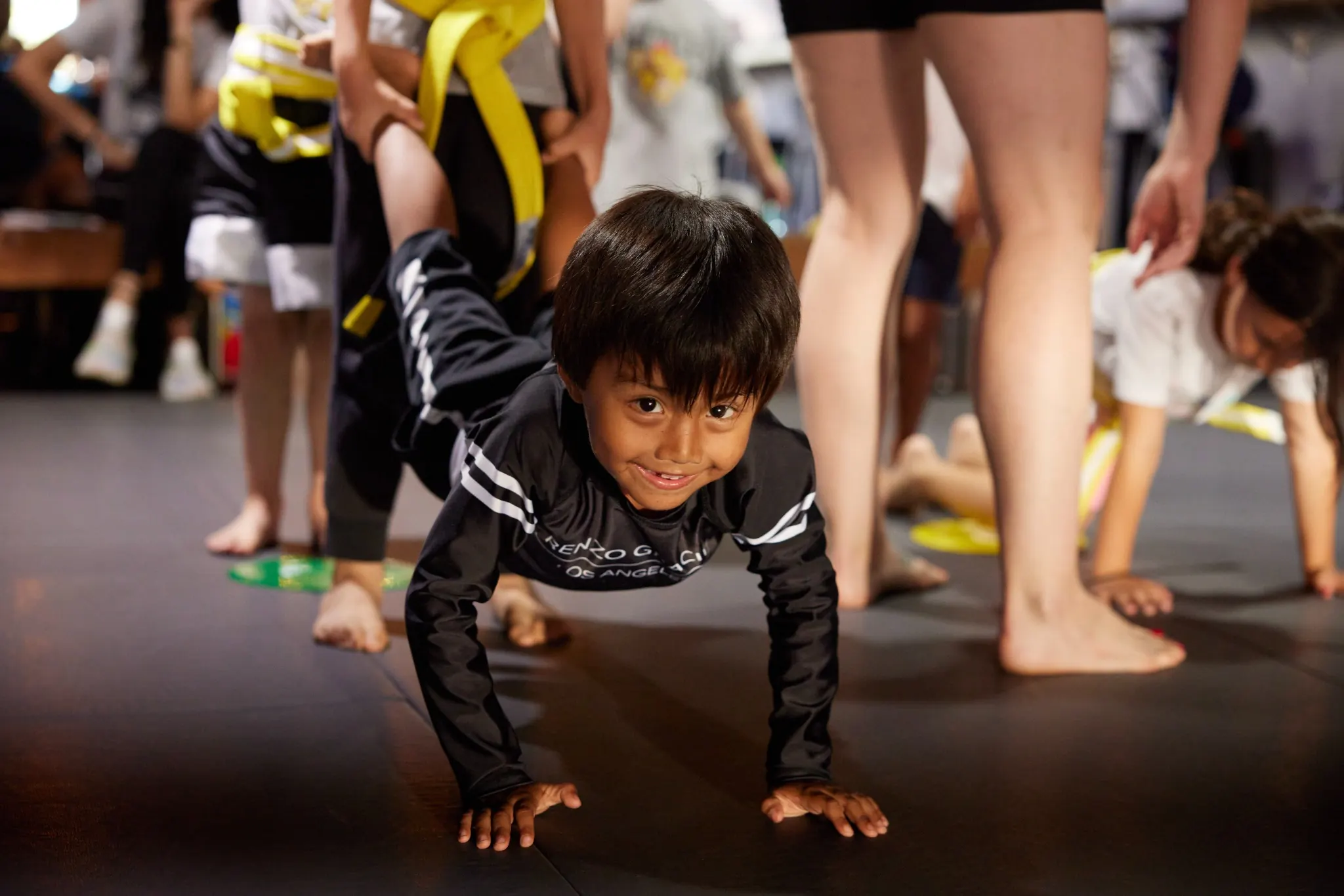
The warm-up games matter more than they look. Tag, crab walks, races across the mat. The kids think it's recess. What's really happening is coordination, balance, self-control and the ability to follow an instruction the first time it's given.
Health experts and child psychologists have been telling parents for years that kids need to move and kids need problems to solve. A jiu jitsu class is both at once. Focus, discipline, self-esteem: those tend to show up at home before the technique does.
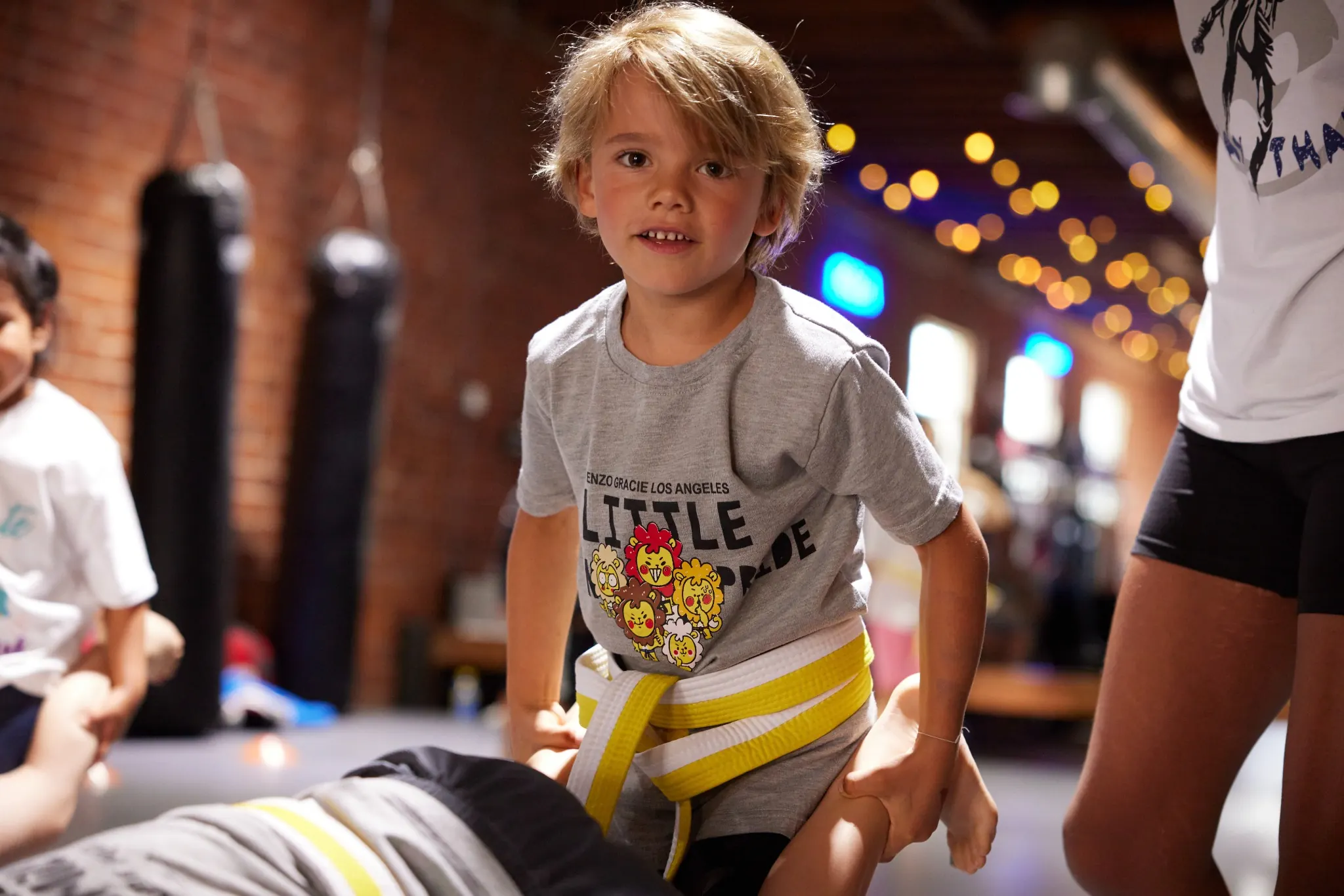
Then comes the technique. A coach demonstrates one move, maybe two. The kids pair up and repeat it while the coach walks the room fixing feet and hands. Some days end with light rounds where the kids get to try what they learned on each other, which is the part they talk about in the car.
The respect stuff is baked in. Bowing onto the mat, shaking hands before and after, listening while the coach talks. It sounds old-fashioned. It works. You'll see a room full of smiling but determined faces, which is exactly the mix we're after.
Jiu jitsu or Muay Thai: which is right for my kid?
If your kid loves wrestling around on the floor, start with jiu jitsu. If your kid loves kicking and punching, start with Muay Thai. Both programs teach both, so you don't have to get this right on day one.
Jiu jitsu is grappling: takedowns, pins, escapes and submissions, with a tap to end things safely. We tell parents it's chess with your body. Every position has a next move and a counter, and a kid has to think two steps ahead while someone is actively trying to pin them. Their limbs are the pieces.
Muay Thai is the striking side, the art most people call kickboxing. Kids learn stance, footwork, punches and kicks on pads with a coach holding them. Got a kid with energy to burn? It's loud, it's sweaty, and it was made for that kid.
Both are real self-defense. Knowing how to get someone off you, or how to throw a punch properly instead of flailing, is a skill a kid can carry for life. More on the why of all this in our post on the benefits of martial arts for kids.
Will my kid have to compete?
No. Competing is optional at Renzo Gracie LA, and plenty of kids never do. Jiu jitsu and Muay Thai are different from team sports that way. The emphasis is on individual growth, not on winning for the team, so there's no pressure to enter a tournament and no way to let anyone down.
What we see on the mats is that this frees kids up. Their biggest competitor becomes themselves. Instead of a "must win" mentality, they slip into a "level up" mentality: I couldn't do this last month, and now I can. That's a healthier way to think about progress, and it tends to stick around long after the gi comes off.
Some kids do fall in love with competing. If yours does, great, we'll help. If yours doesn't, also great. Both kinds of kid earn their belts the same way.
What do belts and stripes mean to a kid?
They mean more to a kid than a trophy, because a kid knows exactly what went into one. A belt promotion in jiu jitsu isn't handed out for showing up. It's earned over months of sweat, repetition and the occasional frustrated afternoon. When the coach ties a new belt on, the kid understands the measure of work behind it. That's why these are some of the proudest, most memorable moments we get to watch.
Have you ever seen a seven-year-old try not to smile? Promotion day is the closest thing.
Can I stay and watch?
Yes, and we'd rather you did. Parents are welcome to stay for the whole class. You'll see your kid jump out of their shell the moment they hit the mats, sometimes on the first day, sometimes on the fifth. The kid who won't look up on day one is bowing to partners by week three. Watching that happen is half the fun.
Our kids' coaches, like Coach Jon Quero, make it their job to make every kid feel heard and seen while they battle through class. Kids can tell when a grown-up actually likes them. Ours do.
How to get started with kids jiu jitsu in Los Angeles
Bring them to a free class. That's the whole process. One or two classes is usually all it takes for a kid to decide they love this, so we offer a free trial to every new student instead of asking you to guess.
Bring the kid who's begging for it. Bring the one who's never mentioned martial arts too. Plenty of parents assume their child isn't the type, then watch them refuse to leave the mat. Try it before you rule it out.
Give us a call at 323-933-1708, stop by 5203 Hollywood Blvd, or book a free kids class online and come sit in the parent's chair. Your kid does the rest.
Questions people ask
What age can my child start jiu jitsu at Renzo Gracie LA?
Little Lions starts at age 5 and runs through 7. Junior Lions covers 8 to 12, and Teens picks up at 13. If your kid is right on a boundary, come in for a free class and the coaches will place them where they'll get the most out of it.
What should my kid wear to their first class?
Comfortable athletic clothes with no zippers or pockets, and bare feet once they're on the mat. Bring water. If your kid sticks with it, they'll need a gi for jiu jitsu, and the front desk will walk you through that when the time comes.
Is kids' jiu jitsu safe for a small or shy kid?
Yes. Techniques are drilled slowly, the coach controls the room, and a tap ends any exchange before it turns into anything. In our experience the shy kids are the ones who change the most. They start quiet and end up asking for one more round.
How many days a week should a kid train?
Two classes a week is a good start for most kids. It's enough to build skill and keep it fun without burning anyone out. Check the weekly schedule for kids' class times and pick the days that fit your family, not the other way around.