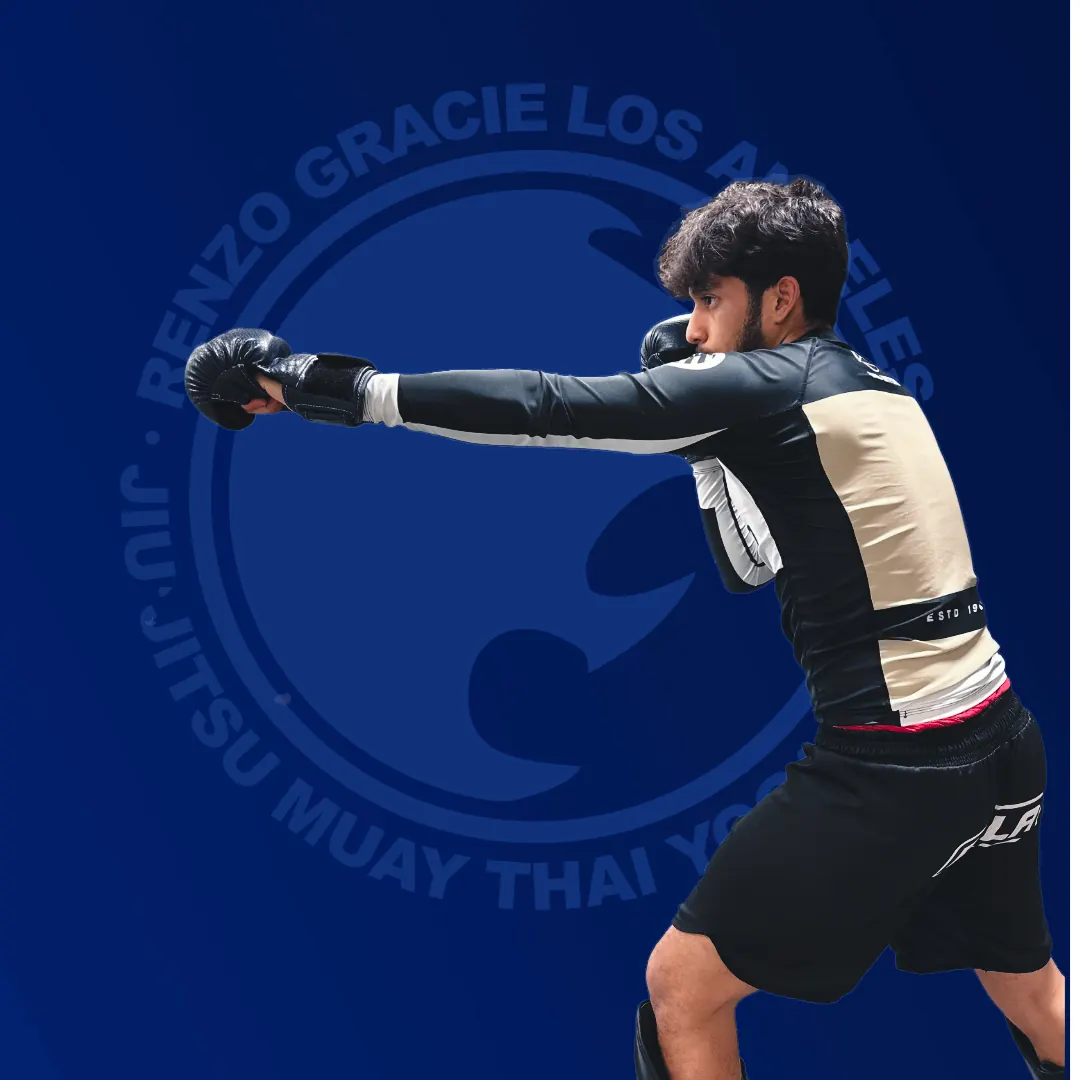
You saw the clip. A fighter in Bangkok throws an elbow that seems to come from nowhere, the crowd loses it, and the comments are full of people saying "art of eight limbs" like it's something everyone already knows.
So now you're curious. Maybe you want to get in shape and hitting a pad sounds a lot better than a treadmill. Maybe you've wanted to try it for years and the only thing stopping you is not knowing what happens when you walk in.
Fair enough. The worry is usually some version of: I'll get hit in the face, I'll gas out in five minutes, and everyone will know I'm new. The first one won't happen. The other two will, and nobody will care.
Short version: Muay Thai is Thailand's striking art. You hit with fists, elbows, knees and shins, and you learn to control an opponent up close in the clinch. It's the base for a lot of MMA strikers. A beginner class is pad work, partner drills and conditioning, not getting punched in the face. At RGLA, Muay Thai runs six days a week. First class is free.
What is Muay Thai, exactly?
Muay Thai is a striking martial art from Thailand, and it's called the art of eight limbs because you strike with eight weapons: two fists, two elbows, two knees and two shins. Boxing gives you two. Most kickboxing gives you four. Muay Thai uses the whole body, and that's the first thing that makes it different.
The second thing is the clinch. When two fighters get close, they don't back off and reset. They grab each other's head and neck, fight for posture, throw knees, and try to off-balance each other. It's grappling on your feet, and it's where a lot of Muay Thai fights are won or lost.
It's Thailand's national sport and a serious self-defense system. It's also, for a lot of people who walk into our gym, just the workout that finally stuck.
Why the eight limbs matter
Because each one covers a range the others can't. Here's what each weapon does:
- Fists. Jab, cross, hook. Not your longest weapon, but the one that sets up everything else, and the first thing you'll learn to throw.
- Shins. The round kick is Muay Thai's signature and your longest weapon. You kick with the shin, not the foot, and you toughen it up over time. Catching one on the pads for the first time is a memorable afternoon.
- Knees. Thrown from the clinch, they land like nothing else, and they're the reason nobody wants to be held around the neck by a Thai boxer.
- Elbows. Short, sharp, and used when there's no room for a punch. In the ring they end fights. In class you'll learn them on pads long before you ever throw one near a person.
What does that mean for a beginner? You're never stuck. Too far away? Kick. Too close? Elbow or knee. Getting held? Clinch back. There's always an answer, and learning them one at a time is the fun part.
Why is Muay Thai the base for so many MMA strikers?
Because it covers every striking range plus the clinch, which is where MMA fights spend a lot of their time against the cage. A fighter who trains Muay Thai already knows how to kick, knee, elbow, and fight for position with their hands on someone's neck. Add wrestling and jiu jitsu and you've got the full picture.
That's why so many of the strikers you see on TV have a Muay Thai background, and it's why our MMA program leans on it. If you're curious about fighting but not ready for a cage, Muay Thai is where most people start, and where plenty of them happily stay.
Will you get hurt in Muay Thai?
In a beginner class, no more than in any hard workout. Expect sore hips from kicking, tight calves from being on your toes, and shins that complain for the first few weeks. That's it. Nobody's swinging at your head on day one.
Sparring is its own thing, and beginners don't do it right away. When you get there, it's light, it's geared up, and the pace is the coach's call, not your ego's. Respect for the coach and for your partners isn't decoration here. It's what lets people go hard on the pads and easy on each other.
What about getting hit for the first time? It happens eventually, in a controlled round, with gloves on, and most people are surprised by how little it bothers them. Then something shifts. You stop flinching, and that calm follows you out the door.
What does a beginner Muay Thai class look like?
Pads, partners and sweat. Most classes run in roughly this order, though every coach has their own flavor:
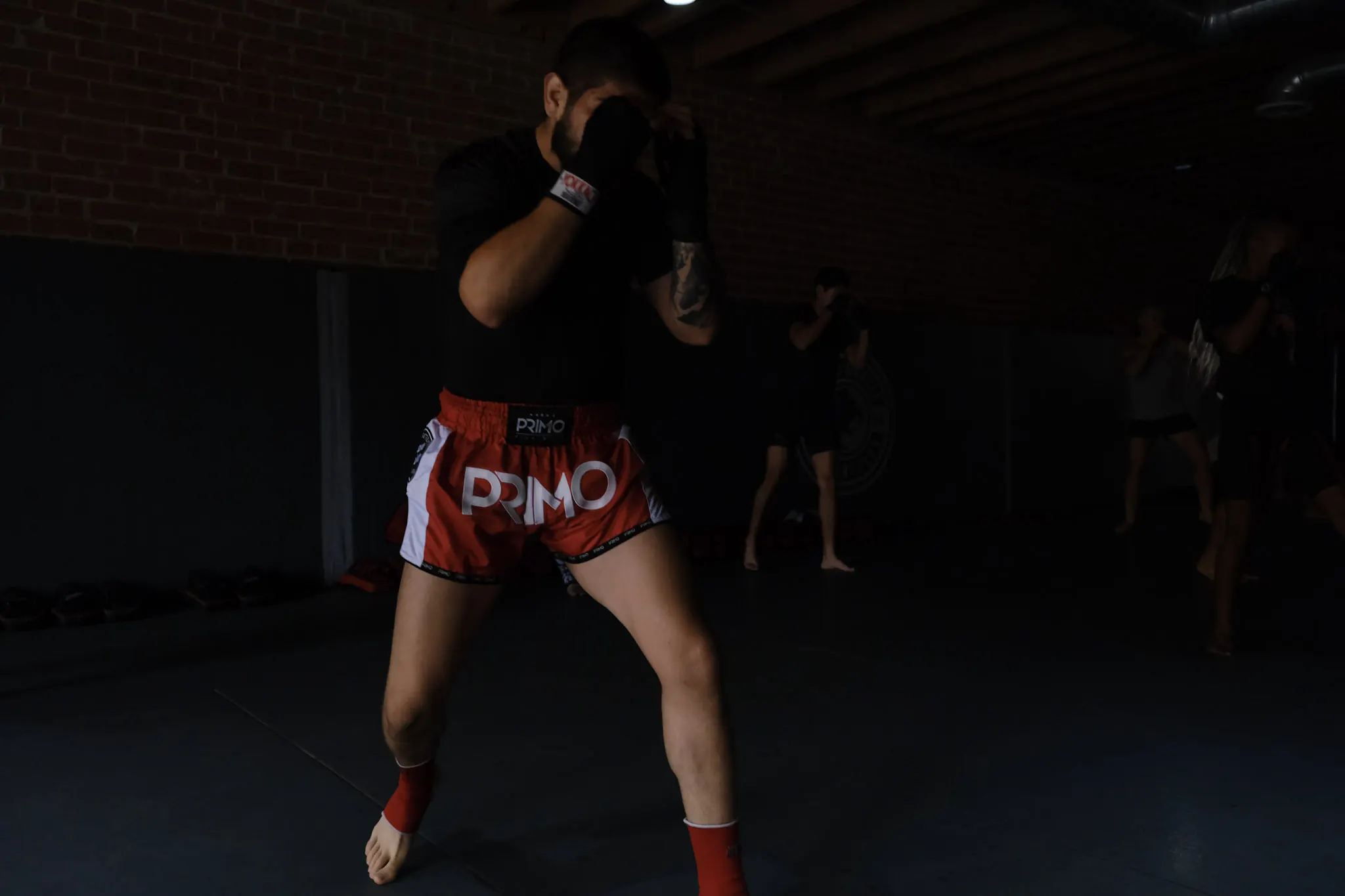
- Warm-up. Skipping rope, shadowboxing, some mobility for the hips. You'll be breathing hard before the technique even starts.
- Technique. The coach breaks down one or two things. A jab-cross-kick combination. How to check a kick. Where to put your hands in the clinch.
- Pad work. You partner up. One person holds Thai pads, one hits, then you switch. This is where the room gets loud and where you find out how much power you actually have.
- Partner drills. Slow, cooperative rounds where you practice the day's technique on a person instead of a pad.
- Conditioning. Kicks on the bag, knees, core work, and then you're done and your shirt is a different color.
Sound like a lot for one class? It is. That's also why the hour disappears.
The coaches are the real thing. Coach Fannie has more than ten years in the art and taught in Thailand. Coach Rafa is part of the Muay Thai team, and Coach Nate runs Muay Thai fundamentals at 7am on Tuesdays and Thursdays, which is a very good way to start a day.
What Muay Thai does for you outside the gym
It gets you in shape fast, and not gym-mirror shape. Kicking, kneeing, and holding pads for a partner work your core, legs and arms all at once, and the rounds build the kind of conditioning that makes stairs feel like nothing. Most people who stick with it for a few months look and feel different, and they never had to count anything.
The bigger change is mental. Muay Thai asks for discipline and focus every round, because the moment you stop paying attention is the moment a pad or a shin reminds you. That focus carries. So does the confidence, and it's the earned kind: you showed up on the days you didn't feel like it and hit the pads anyway.
Come hit something
You don't need to be fit, coordinated or brave to walk in. You need shorts, a water bottle, and the willingness to look a little awkward for a couple of weeks. Everybody in the room was that person once. Most of them remember it fondly.
Muay Thai at RGLA runs six days a week, so there's a class that fits around your work. Book a free first class, tell the coach it's your first time, and go find out what the eight limbs feel like from the other side of the pads.
Questions people ask
Do I need to be fit before starting Muay Thai?
No. The fundamentals class is where you get fit. Your first few sessions you'll be gassed after the warm-up, and that's normal. Go at your own pace, drink water, and come back in two days. The conditioning shows up faster than you'd think.
What should I bring to my first Muay Thai class?
Comfortable shorts, a t-shirt, water and a towel. Hand wraps and gloves are the gear you'll eventually want, but ask the front desk what you need for day one so you don't buy anything before you know you like it.
Is Muay Thai good for self defense?
Yes, especially for keeping someone off you and for hitting back hard when you can't. Elbows and knees work when someone's too close to punch. Pair it with jiu jitsu for the ground and you've covered both ranges. We wrote more about that in our self defense post.
How is Muay Thai different from kickboxing?
Kickboxing generally uses punches and kicks. Muay Thai adds elbows and knees, kicks with the shin instead of the foot, and includes the clinch, where you control your opponent's head and posture. It's a more complete striking system, which is why MMA fighters lean on it.